Back to top

How Can Manufacturers Speed Up End-of-Line Packaging Without Hiring More Staff?

Finding people to run a packaging line has become one of the hardest parts of running a plant, and every…

How Can Manufacturers Speed Up End-of-Line Packaging Without Hiring More Staff?

9th October 2026

Finding people to run a packaging line has become one of the hardest parts of running a plant, and every unfilled shift slows output and eats into margin. That leaves operations leaders with a practical question: how can manufacturers speed up end-of-line packaging without hiring more staff?

Manufacturers speed up end-of-line packaging by automating the manual handoffs between filling and shipping, mainly product transfer, bundling, and wrapping, so the line runs at a steady pace with fewer hands on it.

That answer sounds simple, but most packaging lines don’t slow down because of one weak machine. They slow down at the handoffs between machines, and knowing where those handoffs break is what separates a smart automation investment from an expensive one.

Why Is the Labor Gap Hitting Packaging Lines So Hard

Deloitte and The Manufacturing Institute estimate that U.S. manufacturers could need as many as 3.8 million new workers between 2024 and 2033 and that roughly 1.9 million of those jobs could go unfilled if workforce challenges aren’t addressed. In the National Association of Manufacturers’ 2024 first-quarter outlook survey, 65 percent of respondents named attracting and retaining talent as their primary business challenge.

End-of-line packaging tends to feel that shortage first. The work is repetitive and physically demanding, and it is often staffed with entry-level roles that are hard to fill and quick to turn over.

When one station runs short, the cost spreads. Fillers, cappers, and labelers that represent far larger capital investments end up waiting on the slowest manual step at the end of the line.

Where Do Packaging Lines Actually Lose Time

Most lost time hides in the gaps. Products get moved by hand from a labeler to a bundler, straightened before they enter a case packer, or counted and grouped by someone standing at a table. Each manual touch adds variability, and variability is what makes a line stop and start.

Small stoppages are the usual culprit. A tipped bottle, a jammed carton, or a crooked stack takes only a moment to clear, but those moments repeat across every shift and rarely show up clearly in production reports.

Changeovers make it worse, because lines that depend on people to adjust guides or re-sort packaging lose time whenever the product mix changes.

How Table Top Conveyors Keep Products Moving Without a Person in the Middle

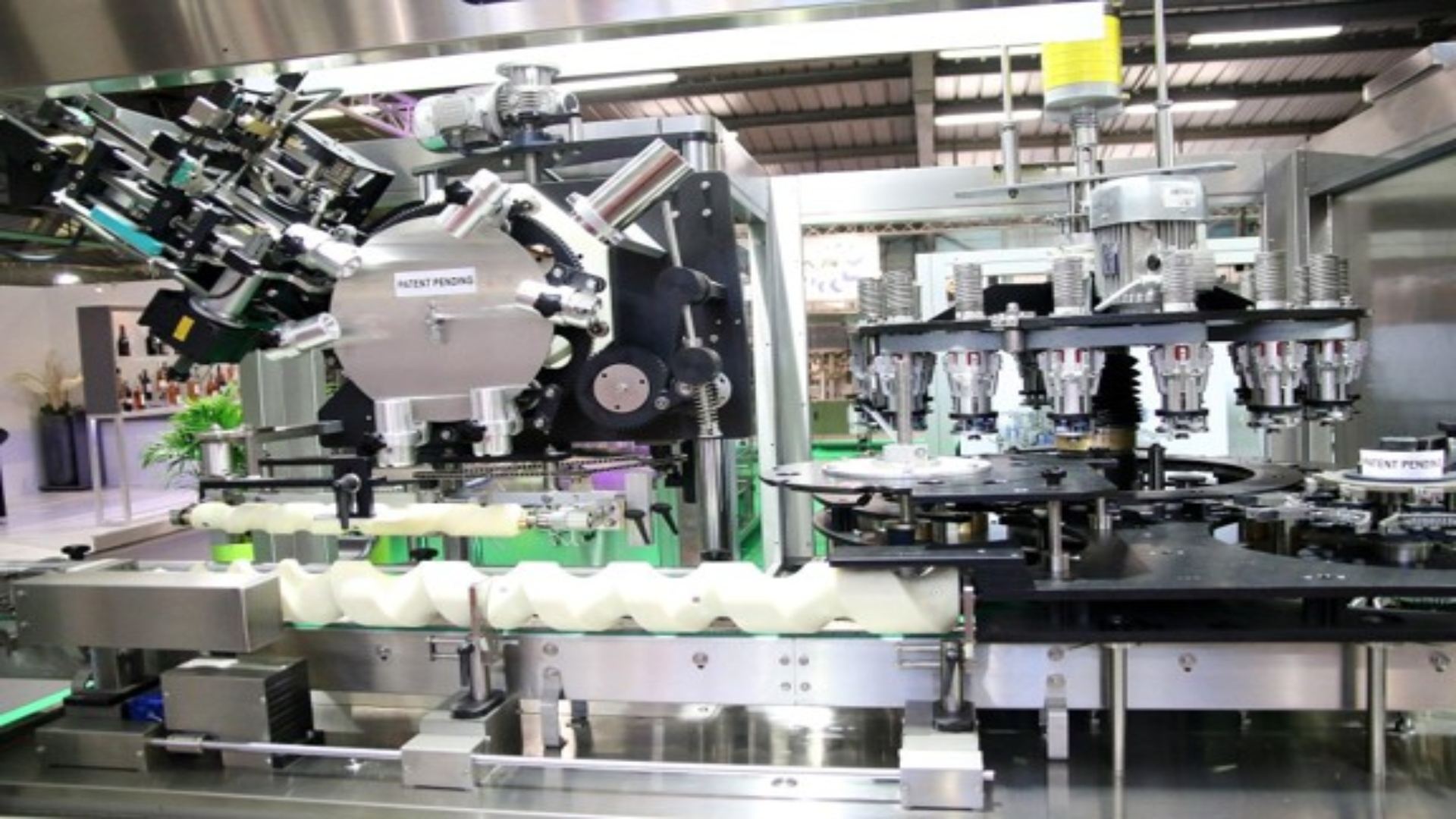
Table top conveyors use a flat chain of interlocking plastic or stainless steel links to give bottles, jars, cans, and cartons a stable surface to ride on from one machine to the next. They replace the hand transfers that slow everything down.

Newer designs go further. Zero-pressure table top conveyors can carry round bottles and rectangular cartons alike while holding their orientation, which prevents the line pressure that scuffs labels and damages products. Stainless steel versions are built for washdown environments in food, dairy, and meat processing, where sanitation rules are strict.

The business benefit is consistency. When products reach the next machine spaced and oriented correctly, the person who used to stand there straightening them can move to quality checks or other higher-value work.

What Role Does Automated Bundling Play

Once products move reliably, grouping them becomes the next manual bottleneck. Inline banding systems can count, stack, and band products with little to no operator assistance, replacing hand bundling or slow film wrapping at the end of the line.

Felins, a Wisconsin packaging equipment maker in business since 1921, builds ultrasonic banding systems designed to integrate into automated production lines. The company reports that banding can cut packaging mass by up to 95 percent compared with traditional methods, which also means less material to buy, store, and dispose of.

Paired together, a conveyor that feeds products consistently and a bander that groups them automatically remove two of the most labor-intensive steps on a typical packaging line.

How Should Leaders Decide What to Automate First

Start with the line, not an equipment catalog. Time each station across a full shift and note every point where a person transfers, straightens, counts, or wraps product by hand.

Rank those steps by labor hours per unit and by how often they cause stoppages or rework. The steps that score high on both are usually the best first candidates for automation.

Before committing, ask suppliers to test your actual products or analyse your current line, so you know the equipment handles your containers and speeds before it reaches the floor.

Putting Your Line to Work Smarter

Automation doesn’t require a full line overhaul. The most useful next step is to map your end-of-line process station by station for one full shift, mark every place a person touches the product, and use that map to choose the first handoff to automate.

Categories: Logistics

Our awards

Discover Our Awards.

See Awards

You Might Also Like