Back to top

Pre-Built vs. Custom AI for Document Management: A Process-by-Process Guide

AI can automate almost any document process today, but not every process should be built the same way. Purchase orders,…

Pre-Built vs. Custom AI for Document Management: A Process-by-Process Guide

19th October 2026

AI can automate almost any document process today, but not every process should be built the same way.

Purchase orders, invoices, contracts, and personnel files move through your business constantly.

Teams now wire up their own AI agents to handle pieces of that work: a script here, a chatbot there, a custom retrieval pipeline built over a weekend.

For a lot of that work, building it yourself is a fine choice.

For a few specific processes, you’re rebuilding something a ready-made, secure Enterprise Content Management (ECM) platform like Doxis already provides: role-based access control, audit trails, configurable retention rules, and predictable, rules-based processing.

Here is how to tell which is which, process by process.

Where DIY AI Works 

A few kinds of work tolerate a homemade setup without much downside.

Meeting Notes and Internal Summaries

Summarizing a call or drafting a first pass at an internal report has a small blast radius. A human reviews it before it goes anywhere.

Ad Hoc Search

Looking for something you vaguely remember reading in a folder of PDFs works fine with a general-purpose model and a lightweight retrieval layer.

Low-Volume, Low-Stakes Drafting

A task that runs a handful of times a month, with no legal consequence attached to being wrong, tolerates variance.

Experimenting With New Models

Testing which model performs best on a task is worth rebuilding often.

None of these need an ECM underneath them.

Where Building It Yourself Gets Expensive

Purchase-to-pay, order-to-cash, HR document handling, contract lifecycle management, and compliant archiving behave differently.

Two things go wrong when a homemade AI setup takes these on.

The first is inconsistency. Feed the same invoice, contract clause, or termination document into a language model a hundred times, and the answer can shift with the model’s temperature setting or a prompt someone tweaked last week.

A process that must produce the same result every time can’t tolerate that drift.

The second is access that nobody scoped down. An AI agent with broad permissions and no check outside its own reasoning can act on that access in ways nobody intended.

In late April 2026, an AI coding agent at a car-rental software company called PocketOS hit a credential mismatch during a routine task and “fixed” it by deleting a cloud volume, which turned out to hold the production database.

According to the founder, it took nine seconds, and the backups sat on the same volume. The hosting provider later restored the data.

Commentary on the incident notes the agent had been told never to run destructive commands without approval, and ignored that. An over-broad API token made it possible.

This was a coding agent, not a document one, but the failure mode carries over. A document agent with standing, unchecked access to invoices, contracts, or personnel files can make a similar mistake at a scale that’s hard to notice until an audit turns it up.

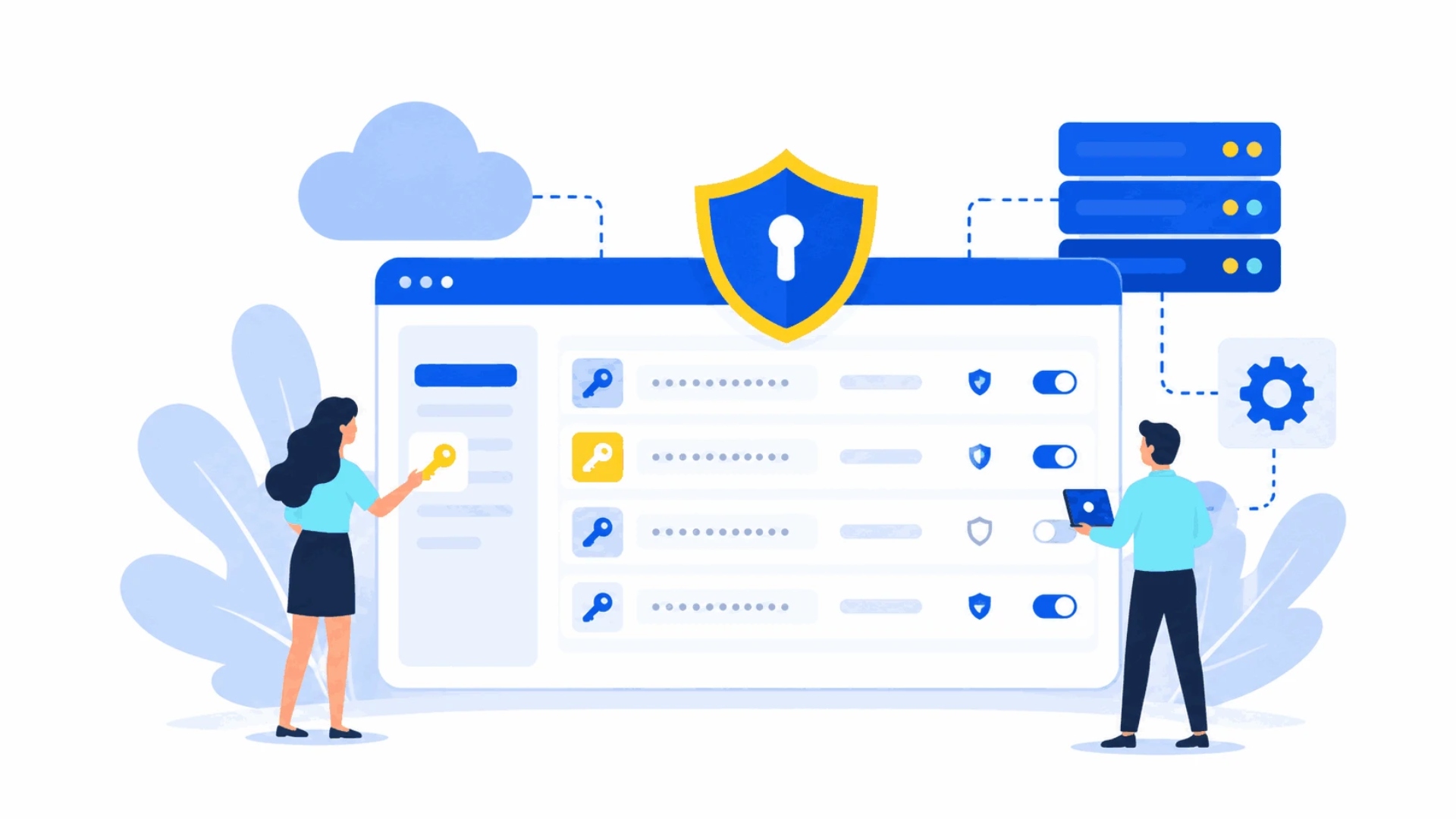
The safeguard has to sit outside the agent’s own judgment: access scoped to the person it acts for, deletion restricted or locked, and every change logged.

Pre-Built vs. Built Yourself

Building it yourself gives you speed and flexibility

You choose the model, change the workflow whenever you want, and ship something usable in days. You don’t automatically get consistent output, an access model outside the AI’s own judgment, or compliance logic for finance and HR regulation in the jurisdictions you operate in. You can build all of that. It becomes a second project that needs maintenance as regulations shift and volume grows.

A ready-built ECM gives you that foundation already in place

A platform built for purchase-to-pay, order-to-cash, HR, contract lifecycle management, and compliant archiving runs rules-based process logic that behaves predictably and can be audited. Access is built around roles, and an audit trail records every change.

Retention rules are configurable per document type, so you set them for your jurisdictions instead of coding them from scratch. The price is the flexibility of building exactly what you want.

Neither approach is wrong. The question is whether a process needs that foundation, and whether engineering time is better spent building it or on work unique to your business.

Which Parts Are Actually Worth Rebuilding

Four questions, applied to a specific process, settle the trade-off.

How often does it repeat, and at what volume?

A one-off task tolerates variance. A process running thousands of times a month doesn’t, because small error rates compound into real costs.

What happens when it’s wrong?

A misfiled internal note is an inconvenience. A missed invoice discrepancy, a personnel file that wasn’t purged on schedule, or a contract clause that quietly expired is a compliance exposure.

Does the answer need to hold up in an audit months or years later?

Financial and HR processes need a defensible trail of exactly what happened and why. Most general-purpose AI stacks weren’t built for that.

Is the compliance logic jurisdiction-specific?

German tax and commercial law set retention periods for financial records, and the GoBD principles govern how they must be kept electronically. In France, the CNIL oversees how personal data in HR files is handled.

In the US, SOX-driven requirements shape audit trails. None of that maps onto a single prompt template, and keeping it current is specialized work.

Purchase-to-pay, order-to-cash, HR, contracts, and archiving usually score high on all four, so they belong on a platform already built for them. A process that scores low is a reasonable candidate to build yourself.

Final Thoughts

Building your own AI setup for drafting, ad hoc search, or low-stakes tasks is a sound choice. The case for a ready-built ECM shows up in purchase-to-pay, order-to-cash, HR, contracts, and archiving, where a wrong result is a compliance exposure.

The PocketOS incident went wrong because nothing outside the agent’s own reasoning limited what it could do. For each process in your document stack, ask whether that safeguard exists, and whether it’s worth building yourself.

Categories: Tech

Our awards

Discover Our Awards.

See Awards

You Might Also Like