Back to top

AI and the Next Decade of Business

AI is already changing how businesses operate, but the biggest transformation may have very little to do with the technology…

AI and the Next Decade of Business

2nd September 2026

AI is already changing how businesses operate, but the biggest transformation may have very little to do with the technology itself.

As companies race to invest in new AI tools and capabilities, the real competitive advantage could come from something much more fundamental: how their organisations are structured, how quickly they can make decisions and whether their people are trusted to experiment, adapt and take ownership.

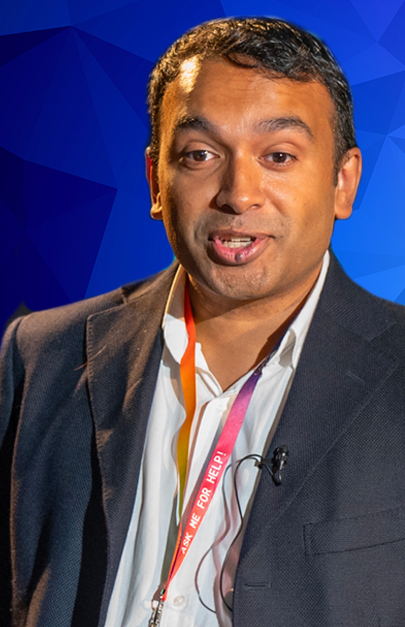
John Samuel, experienced technologist and business founder of Seventh State, believes AI will magnify the cultures and ways of working that already exist within organisations. Businesses built around trust, curiosity and distributed decision-making could move faster than ever before, while those weighed down by bureaucracy. centralised control and fear of failure risk being left behind.

So what will separate the winners from the losers over the next decade, and what should business leaders be doing now to prepare? We spoke to John to find out.

Q1: When people think about AI, they often focus on the technology itself. Do you think they’re asking the wrong question?

Yes but not because the technology doesn’t matter. Because it’s the wrong starting point.

Most people ask “how do we adopt this,” “what’s the ROI,” “will it replace people.” Fair questions, but they assume the answer comes from the top: leadership figures it out, then rolls it out. That’s not how the value actually shows up.

The better question is: how do we get comfortable enough to experiment, then get out of the way?

Your people already know the business better than any consultant or vendor. They see the friction and workarounds you’ll never spot from where you sit. Give them permission to play, and they’ll find real use cases faster than any roadmap will.

That’s the role of champions. Not project managers ticking boxes, the curious ones who go first, experiment in the open, and make it safe for everyone else to try. Get a few of those going and the real use cases surface on their own, from the people closest to the work.

So the technology isn’t the wrong thing to focus on. It’s just not the whole question.

Q2: Looking ahead 10 years, what do you think the biggest differences will be between successful businesses and those that struggle to keep up?

I don’t think the gap will be about who had the best technology. It’ll be about who built the healthiest environment around it.

AI can go one of two ways inside a company. It can become this anxious, pressured thing “use it or you’re behind.” That’s a toxic environment, and you can build one on the back of AI really easily if you’re not careful. And the moment it turns toxic, people stop experimenting. They stop sharing what they’ve found. They hide their mistakes instead of learning from them. The whole thing seizes up.

Or it can be fun.

And I genuinely mean that because fun is where the growth happens. When people are enjoying the exploration, when there’s a bit of playfulness and curiosity in the air, they try more things. They take small risks. They show each other what they’ve built. That’s the environment where the good stuff compounds.

So looking ten years out, the winners are the ones who kept it fun and kept it safe. They got comfortable with ambiguity early, not comfortable with it exactly, but comfortable operating in it. They failed cheaply, laughed about it, learned, and moved on. And because they’d been doing that for a decade, when the ground shifted (and it will shift) they just adapted. They already knew how.

The ones who struggle will be the ones who made it heavy. Who treated AI as a project to manage and a threat to survive rather than a capability to enjoy growing into. Their people spent ten years anxious and cautious, and when things sped up, they were still asking “how do we implement this?” while everyone else was already three iterations ahead.

The real difference isn’t 10% more efficiency. It’s a completely different rhythm. The winners learned that speed of iteration beats speed of planning, and you only get that speed when people actually want to be part of it.

Q3: How do you expect AI to change the way organisations make decisions and run their day-to-day operations?

AI is here to stay, that debate’s over. The real question is what you do with it, and I fundamentally believe AI doesn’t create your culture, it magnifies it. Trust and speed get amplified into more trust and speed. Gatekeeping gets amplified into more sophisticated gatekeeping. Same technology, opposite outcomes, depending on what’s already there.

The biggest shift is that decisions move down and out. Funnelling everything up to a leader or central team is too slow, it wastes the whole advantage. The person closest to the problem is now best placed to make the call, because they’ve got AI thinking alongside them in real time. Not “AI does the analysis, then a human decides later”  but the two of them thinking together, live. A finance person asks “what if we shifted pricing here?” and watches the scenario model out beside them. That’s exploring in the moment, not waiting for a report.

That moves the bottleneck. Velocity goes up because no one’s sitting in the middle and your team moves at the speed of their own thinking.

But it only works on a healthy culture underneath. AI magnifies what’s there, distributed decision-making in a trusting organisation is a superpower; in an anxious one, it’s chaos.

Q4: Will AI fundamentally change the role of business leaders, and if so, how?

It depends entirely on the leader. Some will adapt; others won’t, and that second group should worry; the world moves around them whether they like it or not.

The big shift: leaders stop being the person with all the answers. Leadership used to mean the sharpest judgement in the room, the one everyone escalates to. But if decisions are moving down and out, if people are making good, fast calls with AI alongside them, that old role becomes a bottleneck, you’re the thing slowing everyone down, exhausting yourself trying to review it all.

So the job shifts from deciding to stewarding: setting direction, removing obstacles, building an environment where good thinking can happen. Tending to growth, capability, culture: the human stuff.

What makes it work is ownership. When people feel like genuine stakeholders rather than employees (think of the cooperative model John Lewis is known for, though the principle matters more than any one company) they behave differently. They act without waiting for permission. They optimise for the business, not their next review, because it’s genuinely theirs. You can only trust decisions moving down the organisation if the people making them feel real responsibility for the outcome. Ownership is what makes that trust safe.

So a leader’s real job is to protect that ownership: hire for it, talk about it, and defend it by removing the bureaucracy and gatekeeping that quietly kills it. Set direction broadly, then trust people to find their way there.

Some leaders will find that freeing. Others will cling to control because it’s familiar. That’s where the gap between winners and strugglers comes from, whether leadership can get out of its own way.

Q5: Many organisations are investing heavily in AI. What are the biggest mistakes businesses are making today that could hold them back in the future?

The biggest one, for me, is treating AI as a department instead of a capability.

You see it everywhere. A company decides AI is important, so they stand up an “AI team,” hand them a budget, and say “right, you go and figure this out for us.” And it feels responsible. It feels like leadership. But what they’ve actually done is put the one thing that should be spreading everywhere into a box in the corner.

And it usually comes as a package of three mistakes at once. They centralise it; one team owns it. They treat it as technology – “let’s just buy the right tool and roll it out.” And they don’t change anything about how they actually work, everything else stays exactly the same, AI just gets bolted on the side.

The result is predictable. The AI sits in one place, everyone else waits for it, and nothing really changes. All that investment, and it just doesn’t compound.

The moment you centralise it, you’ve built yourself a bottleneck. You’ve made AI someone else’s job instead of everyone’s job. So the discovery never happens out in the business, where the real problems live.

And go back to what I said earlier, AI magnifies your culture. If you centralise it, you’re magnifying dependency. You’re teaching the whole organisation to wait.

The companies that get this right do the opposite. AI becomes something everyone learns to think with. The finance person uses it, the operations person uses it, the product team uses it, each of them finding value in their area, which is value a central team would never have spotted. Champions appear naturally because people are actually experimenting. Velocity goes up because decisions aren’t stuck in a queue. And that sense of ownership spreads, because people feel like they’ve got agency rather than a dependency.

The mistake isn’t investing, it’s believing the investment is about technology, when really it’s about organisational transformation.

Q6: What skills, capabilities or ways of working do organisations need to develop now if they want to remain competitive over the next decade?

Become an organisation that can think and move fast; everything else serves that. But it’s not a skill you hire in. It’s a system: who you bring in, how you develop the people you’ve got, and the structure they operate inside. Get one wrong and the other two won’t save you.

On people: stop looking for “AI experts,” start looking for curiosity. People who’ll try things without knowing the outcome, who treat failure as feedback, who can sit with “we don’t know if this’ll work, let’s find out” without panicking. Those become your champions, not always the most senior people, but the most curious.

Developing the people you already have isn’t about training on the tools; anyone can learn the buttons. The hard part is giving people permission to think differently: actually telling someone “you can decide this, you don’t need to ask me first.” You build that through small experiments that go well, then bigger ones, and by making it genuinely safe to get things wrong. People need to see a mistake happen and nothing bad follow before they believe it.

None of that sticks without structure. Flatten decision-making so people can move. Create room to experiment. Build cross-functional teams that discover together rather than siloed teams handing off work. Push budget and accountability downward, because that’s what makes ownership real rather than a nice word.

It’s a system because these things only work together: brilliant experimental hires leave if the structure punishes experimentation; restructuring for agility falls flat if you’ve hired people who need certainty; mindset training holds nothing if hiring and structure pull the other way.

Ten years out, organisations that can think and move fast will simply outpace the ones that can’t and that capability can’t be bought in a hurry once you realise you need it. It’s built now, slowly, in how you hire, develop, and organise.

Q7: Do you think AI will create entirely new business models, or will it simply improve the way existing organisations operate?

Both will happen. Some genuinely new business models will appear. Some existing businesses will be reimagined. Plenty will just get more efficient. None of that separates winners from strugglers, what does is whether they can move when the moment comes.

Google shows why “new vs. improved” misses the point. It started as a search engine. But the organisation was built to keep exploring, so it became an advertising business, then maps, email, mobile, cloud, and now one of the biggest players in AI. New business model or improved operation? Both, repeatedly, because the organisation was built to evolve, not to stay precious about what it started as.

Contrast that with companies that had one brilliant model and clung to it. That’s exactly why they struggled: when the ground shifted, centralised decision-making meant pivoting required getting everyone to agree first, and people defended their patch instead of asking what the business should even be now.

That’s why I’d take an adaptable incumbent over a rigid startup any day. You’d assume the new player has the advantage, no legacy, nothing to unlearn. But stubborn founders with a fixed idea will lose to an established business that actually knows how to change. Speed of adaptation beats starting position.

So the real bet isn’t whether you’ve predicted the future correctly (nobody does that reliably). It’s whether your organisation can adjust when reality shows you something you didn’t expect. Companies building discovery, iteration speed, distributed decisions, and real ownership will be fine whichever way the future goes, because they can go either way. Everything else is just guessing.

Q8: If you could give CEOs one piece of advice to prepare their organisation for the next decade of AI, what would it be?

Give someone one real decision they didn’t have before. That’s it.

Everything else – the discovery, the champions, the velocity, the ownership – comes down to whether your people act like owners or employees. You can’t get there with a speech. Ownership isn’t announced; it’s felt the first time someone is genuinely trusted with something that matters.

Not “you can decide the meeting agenda,” not “we’d love your input” followed by doing what you were always going to do. People see through that instantly. I mean a product team that decides what ships next. Someone in finance with real spending authority, no sign-off required. A manager who actually chooses who they hire, without HR quietly holding a veto.

Do it in the next thirty days. You don’t need a strategy.  You need to pick one area, say it out loud, and mean it. People feel the shift almost immediately.

It means living with decisions you wouldn’t have made yourself. The instant you snatch one back because they chose differently, the game’s over, you’ve told everyone the ownership was theatre, and they’ll feel that faster than they felt the trust. You have to hold your nerve.

When you do, that one decision becomes the seed. The person who got it starts behaving like an owner. Others notice: “they got to decide that? Could we…?” Champions appear, themes emerge, decisions start moving down and out on their own.

So don’t start with the technology or a grand transformation programme. Start by handing one person one real decision, and have the discipline to let them run with it. The companies that win the next decade won’t be the ones who adopted AI fastest,  they’ll be the ones who built a place where people think like owners. That begins with a single act of trust.

John Samuel

Categories: Articles, Tech

Our awards

Discover Our Awards.

See Awards

You Might Also Like