Back to top

Email Builders Compared: What Small Teams Should Look For

Title: Email Builders Bompared: What Small Teams Should Look For Description: Compare email builders for small teams and learn which…

Email Builders Compared: What Small Teams Should Look For

10th September 2026

Title: Email Builders Bompared: What Small Teams Should Look For

Description: Compare email builders for small teams and learn which features matter most. Explore design tools, collaboration, integrations, pricing, and usability to choose the right platform for efficient email creation.

Email builders compared: what small teams should look for

Email production gets more complex as a small business grows. A newsletter may eventually require copy review, design changes, mobile checks, approval, and export to an email service provider.

An email builder can simplify that workflow by giving marketers a dedicated place to create, review, and reuse content before sending it through an ESP. For small teams, the right choice depends on campaign frequency, integrations, collaboration needs, budget, and technical support.

This guide compares five tools often considered among the best email template builders for small businesses: Stripo, Tabular, Chamaileon, Topol.io, and Knak.

What should a small business look for in an email builder?

The best email template builders should reduce repeated work without adding complexity. Key features include drag-and-drop editing, optional code access, reusable modules, responsive controls, collaboration, direct ESP or CRM integrations, and pricing that matches the team’s real usage.

1. Stripo

Stripo is an email builder that works with any ESP. It’s designed for email creation and editing rather than sending, making it a strong fit for teams with regular campaigns but no dedicated email developer.

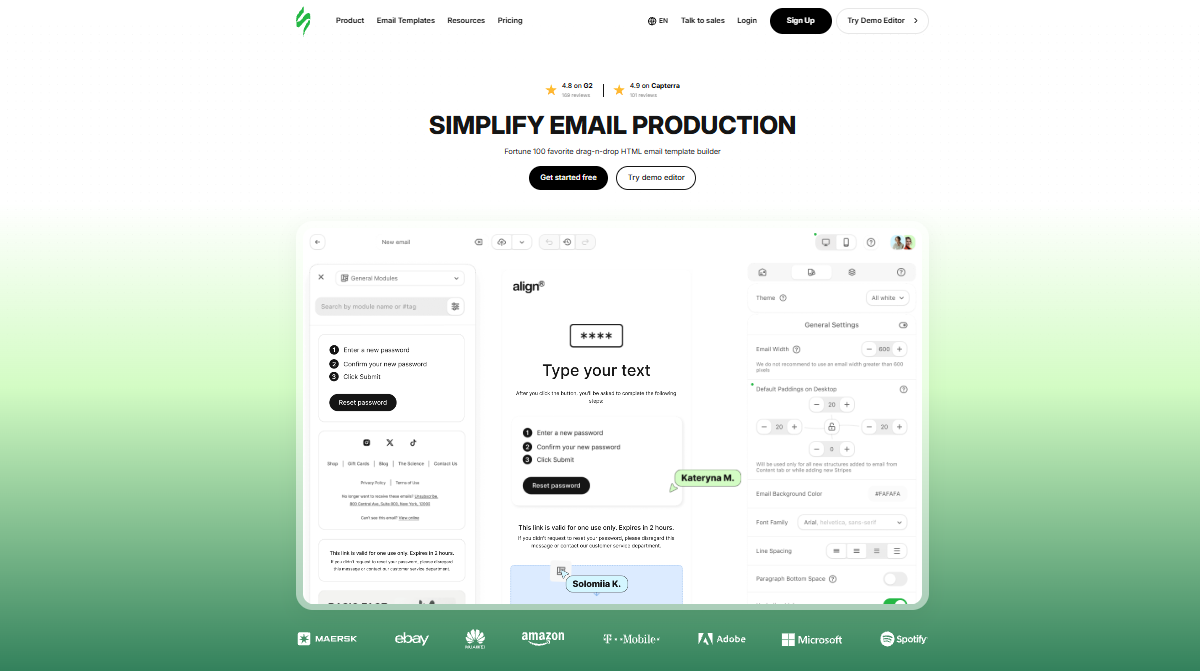
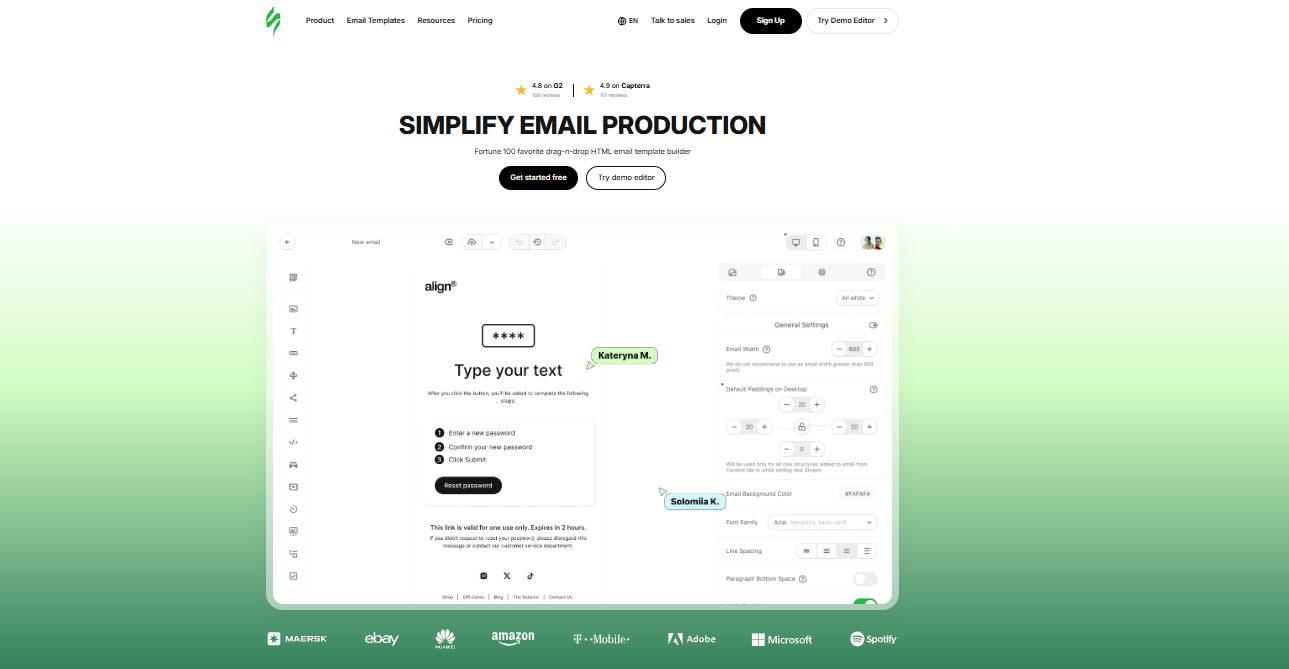
The platform combines drag-and-drop editing and an HTML/CSS code editor in the same window, so marketers can build visually and make technical adjustments without switching tools.

Stripo offers 1,650+ email templates and 300+ pre-built modules. Its modular approach lets teams create approved headers, footers, product cards, CTA sections, and other consistent blocks that can be reused instead of rebuilt for each campaign. Synchronized modules can also keep recurring content aligned across multiple emails.

Stripo supports one-click export to 90+ ESPs and email clients, with CRM connections available through routes such as Zapier or Webhook. This lets businesses keep their existing sending platform while using a dedicated editor for production.

Collaboration features include roles, access levels, comments, real-time co-editing, and version history.

Stripo has a free plan plus paid tiers, including Basic, Medium, and Pro. Higher plans expand limits and collaboration capabilities. It remains an editor, not an email sending service: campaigns are sent through the ESP.

For software companies that want email editing inside their own product, the Stripo plugin is a separate embeddable white-label editor for SaaS platforms, ESPs, CRMs, and other applications.

Best suited to: Teams with regular email production, no dedicated email developer, reusable-content needs, and an ESP they want to keep.

2. Tabular

Tabular is a visual email builder for responsive emails that are exported to external sending platforms. It includes drag-and-drop editing, reusable blocks, dynamic content features, and mobile-layout controls.

Its responsive controls are useful for teams that want more control over mobile layouts. Tabular also supports direct integrations with multiple ESPs.

A free level is available, while paid plans expand storage, exports, previews, and workspace features.

Best suited to: Small businesses that prioritize mobile layout control and want a focused visual editor.

3. Chamaileon

Chamaileon combines no-code email creation with reusable assets, design systems, collaboration, approvals, and user permissions. Its emphasis on brand governance suits teams that need more structured control over approved components.

It also supports collaborative review and connects with ESPs, CRMs, and marketing automation tools.

Its pricing starts much higher than simpler editors, so it may suit growing companies with formal approval processes more than very small teams.

Best suited to: Companies that need stronger brand governance, structured review, and multi-stakeholder approval.

4. Topol.io

Topol.io is a drag-and-drop email builder with templates, reusable blocks, HTML blocks, test emails, integrations, custom fonts, and AI-assisted features. Its relatively accessible paid plans can appeal to smaller teams.

Raw HTML blocks provide flexibility when visual components are not enough. Paid plans also add features such as integrations, version history, saved blocks, collaboration, comments, and mentions.

Best suited to: Budget-conscious teams that want visual creation, reusable blocks, HTML flexibility, and basic collaboration.

5. Knak

Knak is positioned at the more enterprise-oriented end of the market. It supports email and landing-page production, brand governance, approvals, AI-assisted creation, and integrations with major marketing automation platforms.

Its workflow brings creation, review, and launch into one environment. Strong brand controls can help larger teams, but small businesses may find it more complex than necessary. Pricing is custom.

Best suited to: Growing or larger organizations that use enterprise marketing automation and require extensive governance and approval controls.

Which email builder is best for a small business?

There is no single answer for every team. Stripo offers a broad balance of templates, modular content, 90+ integrations, drag-and-drop plus code editing, collaboration, and a free starting plan. It is especially practical for businesses that already have an ESP and want a dedicated production layer.

Tabular stands out for mobile control, while Topol.io can appeal to tighter budgets. Chamaileon becomes more relevant when formal approvals and brand systems matter, and Knak is better aligned with larger marketing operations.

The most useful test is practical: rebuild one real campaign in two shortlisted tools, reuse a content block, ask a colleague to review it, check the mobile version, and export it to the current ESP. The best email template builders for small businesses are the ones that remove the most manual steps from the real workflow.

Final thoughts

A useful email builder should fit the way a company creates, reviews, and exports campaigns. Features such as reusable content, collaboration, responsive controls, integrations, and code access can make regular email production easier to manage.

For small teams, the right choice depends on campaign volume, budget, existing software, and the level of control required. Some businesses may benefit from a flexible editor that works with their current ESP, while others may need stronger approval or brand-management features. Before choosing a platform, it is worth testing a real campaign and comparing how much manual work each option removes from the process.

Categories: Tech

Our awards

Discover Our Awards.

See Awards

You Might Also Like