Back to top

Establish Clear Submission Guidelines Before Opening the Call

Every conference organiser knows the moment when proposals start flooding in. What begins as excitement quickly becomes a logistical puzzle.…

Establish Clear Submission Guidelines Before Opening the Call

22nd December 2025

Every conference organiser knows the moment when proposals start flooding in. What begins as excitement quickly becomes a logistical puzzle. How do you evaluate hundreds of submissions fairly? How do you keep presenters informed without drowning in email? How do you ensure the best content makes it to your stage? The answer lies in building a robust proposal management system that transforms chaos into clarity.

Establish Clear Submission Guidelines Before Opening the Call

Ambiguity kills quality. When presenters guess what you want, they submit proposals that miss the mark. Your call for proposals should spell out exactly what you need: presentation format, session length, target audience level, and specific topics that align with your event theme. Include character limits for titles and abstracts. Specify whether you want learning objectives, presenter bios, or technical requirements upfront.

Think of submission guidelines as a filter that attracts the right content from the start. When presenters understand your expectations, they craft proposals that fit your vision. This saves review time later and reduces the back-and-forth that drains energy from both sides.

Centralise All Submissions in One System

Scattered information destroys efficiency. Email submissions pile up in multiple inboxes. Spreadsheets get outdated the moment someone forgets to update them. Shared drives become document graveyards where proposals go to die. This fragmentation makes it nearly impossible to get an accurate snapshot of what you have to work with.

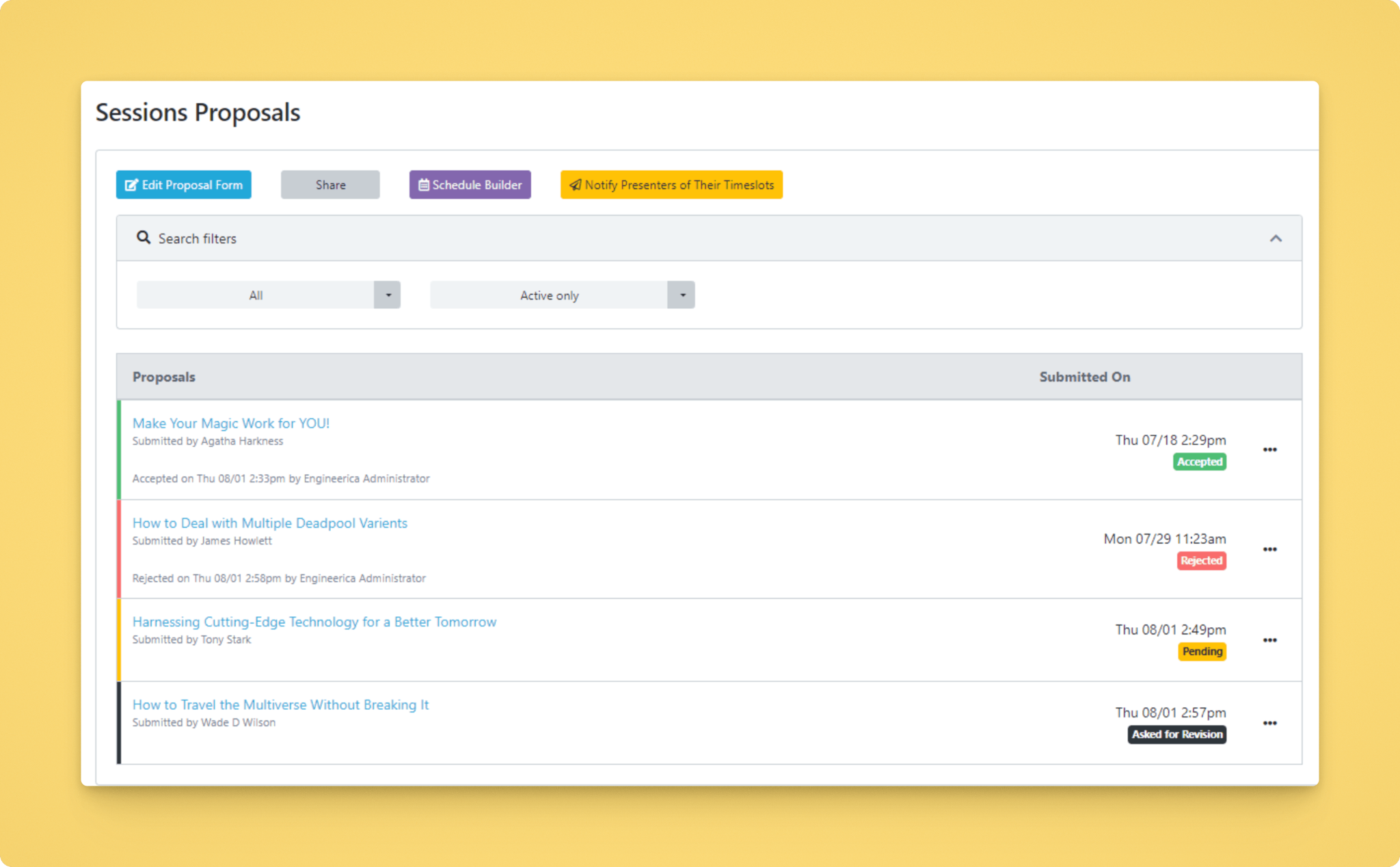
Modern conference proposal management platforms solve this problem by creating a single hub where everything lives. Every submission arrives in one place, organised and searchable from day one. Reviewers can access proposals without hunting through folders or asking colleagues to forward emails. Status updates happen in real time, visible to everyone who needs to know.

Image URL: https://www.engineerica.com/wp-content/uploads/2025/08/session-proposals.png

Conference Tracker exemplifies this approach by delivering a centralised dashboard that captures every proposal the moment it arrives. Organisers can filter by topic, track reviewer feedback, and move submissions through the workflow without juggling multiple tools. This eliminates the manual data entry that consumes hours and introduces errors, letting teams focus on content quality instead of administrative busywork.

Build a Structured Review Process

Random review methods produce random results. Without a clear evaluation framework, bias creeps in, and strong proposals slip through the cracks. Establish scoring criteria that align with your event goals. Is subject matter expertise most important? Presentation skills? Relevance to current industry trends? Define these priorities and weight them accordingly.

Assign multiple reviewers to each proposal when possible. Different perspectives catch strengths and weaknesses that a single reviewer might miss. Blind reviews, where reviewer names stay hidden from each other, prevent groupthink and encourage honest feedback. Set deadlines for each review stage to maintain momentum and respect presenter timelines.

Create Reviewer Guidelines and Training

Reviewers need more than a scoring rubric. They need context about your audience, an understanding of your event objectives, and examples of what excellent proposals look like. Brief

reviewers before they start evaluating. Show them past successful sessions and explain why they worked. Clarify deal-breakers and common red flags.

Consistency across reviewers protects fairness. When everyone applies the same standards, presenters receive equitable treatment regardless of who evaluates their work. This consistency also makes final selection decisions easier because scores actually mean something comparable.

Communicate Status Updates Promptly and Professionally

Radio silence breeds frustration. Presenters invest time crafting proposals and deserve timely responses about where they stand. Automated status notifications keep everyone informed without adding to your workload. When a proposal moves from under review to accepted or declined, the presenter should know immediately.

Transparency builds trust. Even rejection becomes easier to accept when presenters understand the process and know their submission received genuine consideration. Include brief, constructive feedback when possible. A sentence explaining why a proposal did not fit this year’s program shows respect for the effort and encourages future submissions.

Automated systems handle these communications efficiently. Conference Tracker sends confirmation emails when proposals are accepted and assigned time slots, complete with all essential details presenters need. This professional touch eliminates repetitive manual messaging while ensuring no one falls through the cracks.

Plan for Revisions and Conditional Acceptances

Not every promising proposal arrives in perfect form. Some need minor adjustments to fit your program. Others show potential but require significant reworking. Create a revision pathway that lets you work with presenters to strengthen their content.

Conditional acceptances give you flexibility. You can accept a proposal contingent on the presenter adjusting the scope, updating the abstract, or demonstrating specific expertise. This collaborative approach often yields better sessions than outright rejection, and presenters appreciate the opportunity to improve rather than facing a closed door.

Monitor Deadlines and Schedule Strategically

Time management makes or breaks conference planning. Track submission deadlines, review completion dates, and notification schedules religiously. Late reviews frustrate presenters and compress your planning timeline. Missing notification deadlines can cause speakers to commit elsewhere, leaving gaps in your program.

Strategic scheduling considers more than just time slots. Think about audience flow throughout the day, complementary sessions that should or should not run simultaneously, and presenter availability. Room capacity matters too. Popular topics deserve larger venues, while niche subjects work better in intimate settings.

Conclusion

Effective proposal management separates memorable conferences from mediocre ones. By establishing clear guidelines, centralising submissions, building structured review processes, communicating transparently, and scheduling strategically, organisers create experiences that satisfy both presenters and attendees. These practices reduce administrative burden while elevating content quality. The investment in proper systems and processes pays dividends long after the last session ends, building reputation and making future events easier to execute. Your proposal management approach sets the tone for your entire event, so make it count.

Categories: Tech

Discover Our Awards.

See Awards

You Might Also Like