Back to top

Scaling Cross-Border Commerce: How Brands Build Reliable Global Supply Chains

As more brands expand beyond domestic borders, the challenge of managing international logistics grows exponentially. Cross-border commerce introduces new layers…

Scaling Cross-Border Commerce: How Brands Build Reliable Global Supply Chains

21st October 2025

As more brands expand beyond domestic borders, the challenge of managing international logistics grows exponentially. Cross-border commerce introduces new layers of complexity, from customs compliance and regional tax frameworks to currency management and localised customer expectations. Success requires a supply chain that’s not only global but also agile and transparent.

To navigate this new landscape, many businesses turn to a trusted direct to consumer fulfillment provider capable of simplifying global shipping and integrating regional operations. Yet real scalability demands more than outsourcing logistics, it calls for a fully aligned, resilient supply chain strategy that balances compliance, cost, speed, and customer trust across every market.

In this article, we’ll explore the foundational principles, infrastructure, and strategic guardrails that allow brands to scale cross-border commerce efficiently, without collapsing under complexity.

Understanding the Cross-Border Landscape

Cross-border e-commerce isn’t just a trend, it’s becoming the default. According to Avalara’s latest market reports, global B2C e-commerce is projected to reach USD 16.8 trillion by 2030, nearly doubling many expectations. This explosive growth carries logistical, regulatory, and financial friction points: customs, tariffs, local delivery networks, localised payments, returns, and compliance with local laws. Many brands underestimate these hurdles until damage arises in customer satisfaction or cost leakage.

At the same time, academic research reveals how geographic differences in regulation, infrastructure, and market dynamics force supply chain approaches to adapt by region. A recent MIT study highlights that supply chain practices and priorities shift notably between North America and other parts of the world, especially in risk management and innovation adoption. Brands that treat “global” as uniform often misfire when confronted with local nuances.

Core Pillars of a Reliable Global Supply Chain

1. Distributed Fulfillment Hubs & Regional Inventory Allocation

Centralisation fails when used for cross-border scale. The solution is to distribute inventory across key hubs or regional nodes in target markets. This allows orders to ship from local or nearby inventory rather than across continents, reducing transit times, lowering duties, and absorbing local surcharges. A direct-to-consumer fulfillment provider can help you with hub selection and cross-border routing logic, but the real advantage comes when you integrate that with your sourcing and product allocation strategy.

2. Customs, Duties & Regulatory Compliance

Cross-border shipments require care with HS codes, origin declarations, import duties, VAT or GST systems, and local trade laws. Some regions favor paperless trade, exchanging trade and logistics documents electronically, which reduces latency and risk. An intelligent supply chain system must embed customs logic, duty calculations, and compliance workflows into routing decisions; ignoring them can lead to delays, fines, or goods being held at customs indefinitely.

3. Payment Localisation & Fraud Mitigation

Success in cross-border commerce requires more than shipping, you must accept payments that local consumers trust. That means enabling local credit cards, digital wallets, bank transfers, or region-specific banking rails. Cross-border payments add friction (currency conversion, fraud rules, regulatory constraints). Amazon, for instance, has documented how cross-border payments become part of the fulcrum for scaling online sales globally. Integrating payments, order routing, and logistics is vital for a seamless experience.

4. Return & Reverse Logistics Strategy

Returns are costliest in cross-border contexts due to import duties, double shipping, and customs delays. The best supply chains adopt localised returns processing or employ regional reverse hubs to minimise return friction. Some forward-thinking brands even pre-authorise returns by domestic couriers to avoid cross-border turnaround. This design becomes a differentiator in customer retention.

5. Visibility, Orchestration & Adaptive Routing

Global chains require enterprise-grade orchestration. Real-time dashboards showing inventory, order flow, transit times, bottlenecks, and exceptions are critical. Adaptive routing logic must shift orders across nodes or carriers dynamically. The ability to pivot around delays or breakdowns defines resilience. Indeed, research shows that supply chain visibility and responsiveness strongly influence risk tolerance across geographies.

Strategic Mistakes That Derail Cross-Border Scaling

Many brands stumble because they underestimate these constraints:

Over-centralised mindset: scaling in market after market with one fulfillment center until cost and latency break the model.

Treating regulations as afterthoughts: freight, tax, labeling, documentation mistakes deter entry or cause returns and fines.

Isolated logistics stacks: using separate tools for payments, customs, fulfillment, resulting in disjointed data and poor adaptability.

Ignoring local consumer behavior: local expectations for delivery speed, package presentation, returns ease differ widely.

Neglecting risk buffers: no hedging for transport disruptions, customs delays, or geopolitical shocks.

Avoiding these traps requires combining strategic planning with operational rigor.

Implementation Blueprint: Path to Global Scale

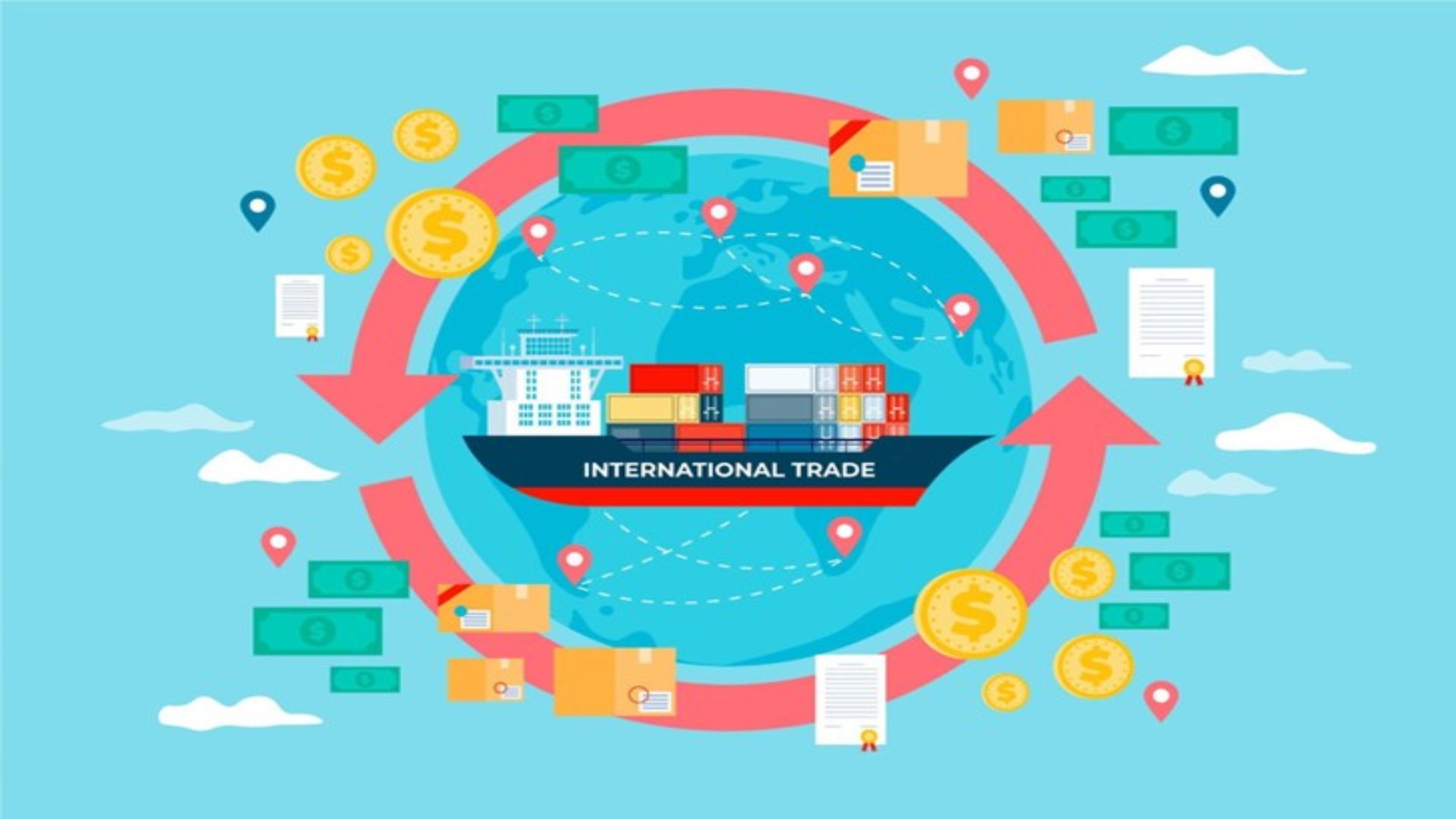
Image from Freepik

  1. Select target markets and regional hubs

Start with markets offering both demand and reasonable logistics infrastructure. Use your fulfillment partner to evaluate hub locations, bonded facilities, and cross-border corridors.

  1. Build a modular supply chain stack

Use systems (ERP, OMS, TMS) that support multi-entity operations. Insist on APIs, plug-and-play modules, and scalable architecture.

  1. Localise commerce for each market

Translate product descriptions, optimise SKUs per region, adjust returns policy, and align payment methods to local expectations.

  1. Establish customs-friendly trade lanes

Use free trade agreements, bonded warehouses, or pre-cleared corridors wherever possible to accelerate cross-border flow.

  1. Run pilots, measure performance & iterate

Launch with smaller volumes, track key metrics (delivery time, cost per order, return rate, customer satisfaction), optimise routing, and scale iteratively across regions.

The Business Impact: Metrics That Matter

To assess your cross-border strategy’s success, monitor metrics such as:

Cross-border cost per order (including duties, freight, returns)

Delivery lead times vs SLA in each market

Return rate and return cost per market

Inventory compliance (stock-outs, overstocks) at local hubs

Customer satisfaction / review sentiment by region

Margin retention after cross-border fees

These numbers expose whether distributed investments are paying off or bleeding margin.

As global e-commerce becomes the battleground for brand differentiation, scaling cross-border commerce is no longer optional, it’s strategic. By pairing the right technology stack, compliance practices, regional insight, and logistics architecture (including partnerships with direct to consumer fulfillment providers), brands can turn global expansion from a risk into a growth engine.

Categories: Logistics

Discover Our Awards.

See Awards

You Might Also Like