Back to top

Using Qualitative Research to Build Customer-Centric Organisations

Quantitative metrics like Net Promoter Scores and CSAT offer a polished executive dashboard, but they fail to explain human behavior.…

Using Qualitative Research to Build Customer-Centric Organisations

6th August 2026

Quantitative metrics like Net Promoter Scores and CSAT offer a polished executive dashboard, but they fail to explain human behavior. They tell leadership that churn increased, not why frustrated buyers abandoned their carts mid-checkout.

Building a truly customer-centric organisation requires digging into qualitative research to uncover the emotional drivers, hidden friction points, and unstated needs of your market. When companies rely solely on spreadsheets, they optimise for numbers rather than people.

Why Qualitative Insight Outperforms Raw Data Analytics

High-performing organisations are much more likely to use qualitative customer insights for strategic decisions and systematically adapt internal processes within weeks. Data analytics reveal patterns, but qualitative inquiries provide context. Raw data points are left unanalysed for every meaningful operational insight a company actually extracts.

If your analytics platform shows a sudden 15% drop in enterprise demo conversions, quantitative data stops at the drop-off point. A single round of five user interviews will quickly reveal that your new form asks for budget commitments too early in the buyer journey.

Qualitative research replaces executive guessing games with direct customer voices. It shifts internal culture from internal assumptions to validated external reality.

Integrating Qualitative Signals into Daily Operations

Collecting interviews, focus group transcripts, and UX recorded sessions means nothing if the data sits in a buried drive. Customer-centric organisations democratise access to real feedback.

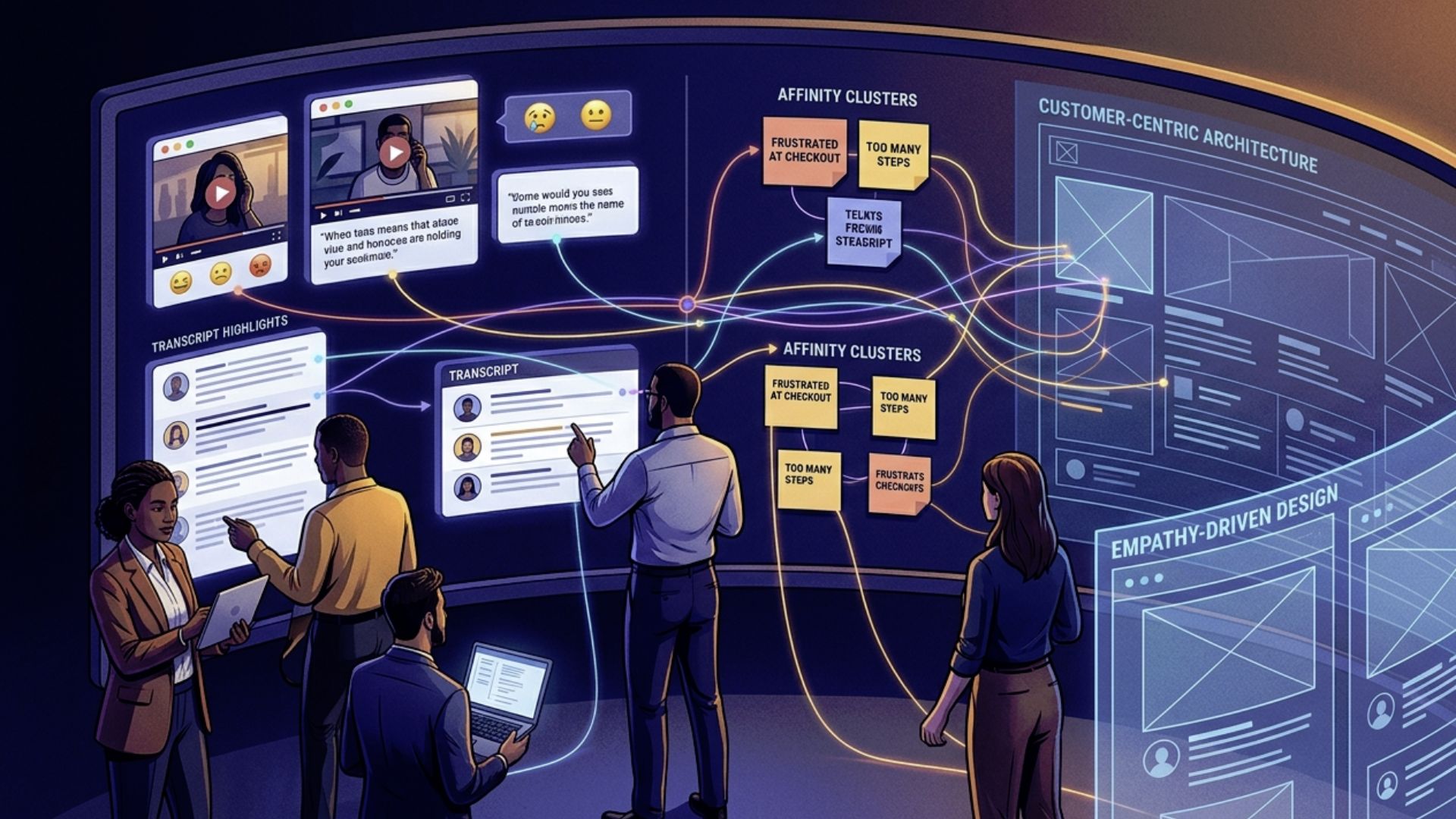
Engineering, product, and marketing teams must regularly review raw user interactions to align behind actual customer needs. Analysing unstructured video responses and open-ended feedback at scale requires modern tooling.

Companies leverage real-time consumer intelligence to synthesise hours of spoken dialogue into actionable strategic direction. The latest tools in this space streamline tasks that were labor-intensive or impossible in the past.

Organisations that scale qualitative feedback across departments share key operational habits:

  • Product managers observe live contextual interviews before approving major feature updates
  • Executive leadership reviews uncensored customer video clips during monthly strategy syncs
  • Support teams tag recurring sentiment patterns directly into product backlog systems

When qualitative context moves freely across teams, cross-functional friction disappears. Product roadmaps naturally pivot from pet executive features to solutions that solve real, articulated customer headaches.

Bridging the AI Gap with Human Motivation

As automated systems handle more frontline touchpoints, brands risk losing direct connection to their market. Research cited by Qualtrics shows that 60% of consumers spend more with brands that actively demonstrate empathy through active feedback loops. Modern customer research in 2026 relies on digital ethnography and UX research to bridge the gap between AI-driven consumer behaviors and human motivation.

Empathy cannot be automated with algorithmic guesswork. It is built by listening directly to your users, understanding their operational stresses, and building software, services, and experiences that actively relieve those burdens.

Resolving Departmental Blindspots with Cross-Functional Research Sprints

Quantitative metrics rarely capture how internal silos fracture the user experience. When product development, support, and marketing operate in isolation, customer feedback gets filtered through conflicting team priorities.

Running cross-functional qualitative research sprints brings real customer friction into plain sight. Having engineers and product managers observe raw user interviews together forces disparate teams to confront the exact same friction points simultaneously.

Aligning key stakeholders around direct customer audio and video replaces speculative internal debates with undisputed user truth. Modern product teams leverage user insights to build products that directly mirror real human needs.

Operationalising Empathy Across Your Organisation

Building a customer-centric company is an architecture challenge, not a branding exercise. It demands moving past static survey numbers and embedding genuine qualitative research directly into everyday decision-making workflows.

When every department bases daily decisions on raw user realities, your organisation becomes far more resilient. Explore our blog for more operational guides on refining research pipelines and scaling human-centered insights across modern product teams.

Categories: Tech

Our awards

Discover Our Awards.

See Awards

You Might Also Like