Back to top

What Businesses Get Wrong About Allyship, Storytelling and Equity

In this exclusive interview with the Champions Speakers Agency, Anna discusses what genuine allyship looks like in practice, how storytelling…

What Businesses Get Wrong About Allyship, Storytelling and Equity

23rd September 2026

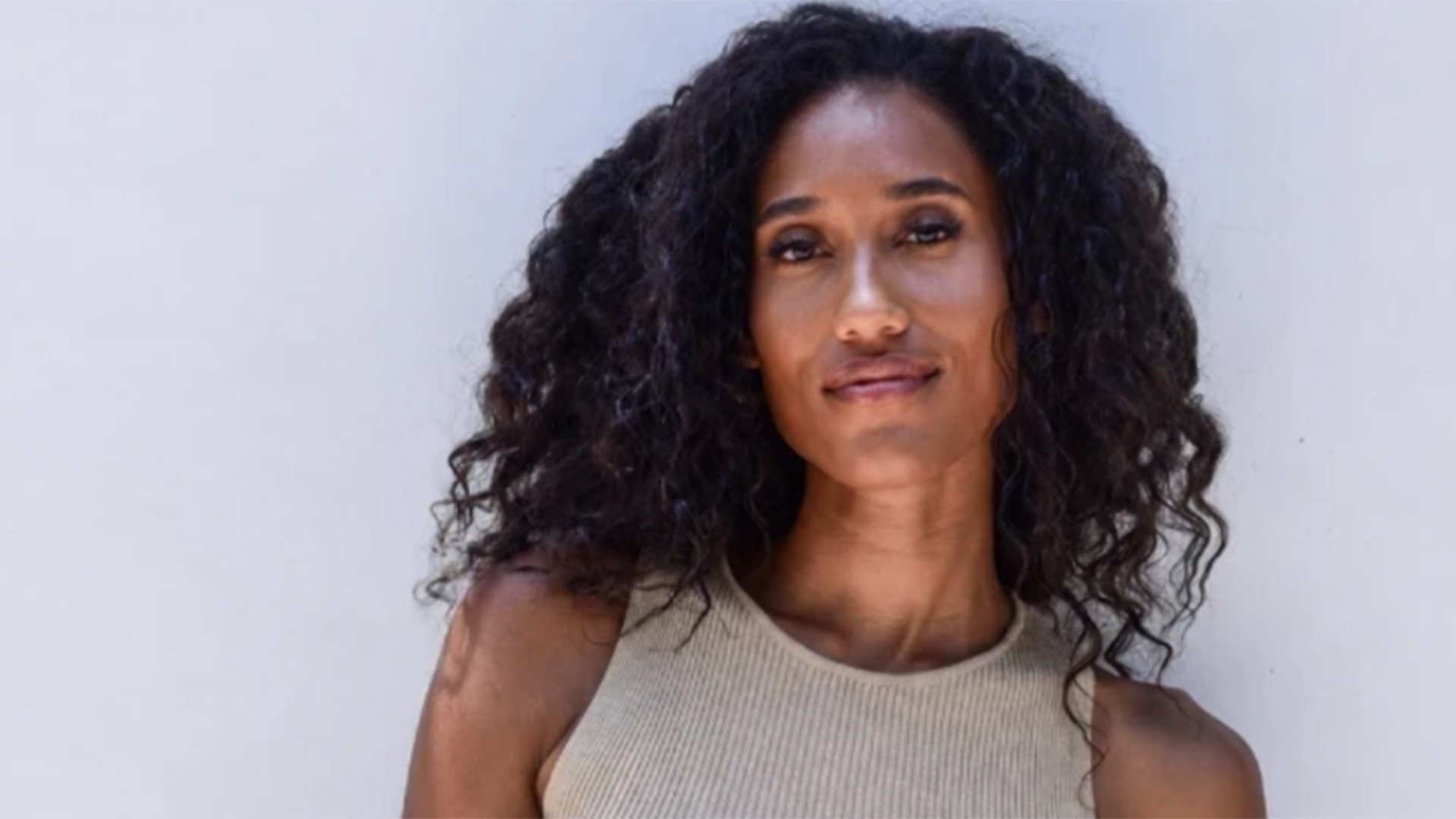
Anna Malaika Tubbs

This exclusive interview with Anna Malaika Tubbs was conducted by Tabish Ali of the Motivational Speakers Agency.

Anna Malaika Tubbs is a sociologist and two-time New York Times bestselling author whose work examines race, gender, identity and equity. She holds a PhD in Sociology and an MPhil in Multidisciplinary Gender Studies from the University of Cambridge.

Her first book, The Three Mothers, traced the lives of Alberta King, Louise Little and Berdis Baldwin, the mothers of Martin Luther King Jr., Malcolm X and James Baldwin. Her second, Erased: What American Patriarchy Has Hidden From Us, examines how patriarchy has shaped American institutions and whose stories have been left out of the historical record.

In this exclusive interview with the Champions Speakers Agency, Anna discusses what genuine allyship looks like in practice, how storytelling shapes the way societies understand race and inequality, and why meaningful equity requires institutions to confront the systems and decisions that created those disparities in the first place.

Question 1. What separates genuine allyship from performative support, particularly within organisations and leadership teams?

Anna Malaika Tubbs: “When I think about allyship, I think about my own mom. She was a white woman married to a Black man with Black children. That doesn’t mean every white woman who has that experience is an ally.

“My mom understood some of these layers of injustice from an early age. Her father was a judge, and she wanted to become a lawyer and follow in his footsteps. But she was getting messages that women and girls didn’t become lawyers.

“She saw a clear discrepancy between what boys were being told they could do and what girls were being told they could do. That was her first introduction to thinking, this is unfair.

“She came from a well-to-do family that was respected in her area, but she was still coming up against these injustices. It made her think about what the experience must be like for women of colour and people who didn’t have the same privileges she did. She became an advocate for women and children.

“When my mom had children of her own, she never tried to tell me what it meant to be a Black girl or a Black woman.

“She said, “I don’t know what it’s going to be like to walk in your shoes, but what I can do is walk beside you, do my part, learn with you and do what I need to do to make this world worthy of you.”

“I didn’t realise how far ahead my mom was in understanding allyship and how you walk with someone.

“There are people who say, “I can put myself in that person’s shoes and I know what their experience is,” or assume what somebody else’s experience is.

“True allyship is saying: I cannot tell you what it feels like to be in your skin, but I will commit to doing my part, doing the learning and making this world worthy of all of us.

“That’s true allyship, rather than simply saying, “We stand together,” or, “We’re all the same.”

“We are all human, but we’re also very different from each other. Our differences are powerful, and celebrating those differences is how we move forward.

“After years of oppression and injustice, we can’t suddenly say, “We’re all human and I see you as human, so everything is fine.”

“Those injustices have to be acknowledged and repaired, and we have to commit to moving forward differently.

“We need actual allyship where people are walking together and doing the work.”

Question 2. How does who gets to tell the story shape the way people understand social issues, identity and inequality?

Anna Malaika Tubbs: “Yes. Storytelling is at the centre of everything we do.

“When I moved to different places, I became very aware of the role stories were playing, not only in our personal lives but on national levels.

“When I lived in Mexico, I learned about the Mexican-American War. A few years later, I moved back to the States and learned about the same war, but I was being told very different stories.

“I also saw the stereotypes people carried about places they had never experienced. When I moved from Estonia to Mexico, people would say things like, “Don’t they ride on donkeys?” Then I went to Mexico and saw how beautiful and diverse Mexican culture is. I thought: who told them this story, and why did they tell them this derogatory story?

“Having a Ghanaian father, I also saw people ask him questions about how he got here or what it was like to live in huts. My dad was a professor of law, but these were the stories people had been told.

“When you’re a storyteller, you become aware of the influence and power a story holds, and how our understanding shifts when different voices are represented.

“In my first book, I looked at Alberta King, Berdis Baldwin and Luis Little. My research showed that all of the mothers did what their sons became famous for before their sons were born.

“There had been so many books about MLK Jr., Malcolm X and James Baldwin, rightfully so. I’m never trying to take away from the sons by highlighting the mothers.

“In fact, we get to know the sons much better by highlighting the mothers and understanding the generational legacy they were carrying.

“I thought there had to be an interesting story about the woman who birthed MLK Jr. and raised him. There wasn’t anything I could find about her online, so I had to do a deep dive.

“People often tell me it was a creative idea to think of the mothers. I don’t think it’s creative at all. I find it shocking that nobody wrote that before me or thought to ask that question.

“That’s how important the storyteller is: the questions we ask, what we’re seeking and the perspective we bring.

“When it comes to storytelling and social justice, it’s everything.

“We need our stories to be maintained and elevated. We need our children to learn these stories so people don’t arrive at a point where it’s easy to give up, become afraid or think we’ve never been here before.

“Stories are the heartbeat of social justice movements.”

Question 3. What does meaningful equity look like when organisations and institutions move beyond statements and begin addressing structural barriers in practice?

Anna Malaika Tubbs: “For me, it helps to get very specific about location because the history of each place, and where injustice has taken place, shows us where something can be fixed.

“We often think of inequity as this huge, inevitable thing, or as the natural order.

“If we look at patriarchy as an example, it’s often presented as simply the way life is. But there were moments when people chose this, designed it, introduced laws and decided how the world would be divided.

“The more we can trace those decisions and pinpoint moments in history, the clearer we become about when inequity started and how it can be addressed through policy intervention or changing laws.

“If we look at the United States, for example, we can go back to the founding of the country and examine laws and systems that excluded people from full participation.

“If any law or system that came out of that worldview reflects inequity, then those laws need to shift so that all people are included in the democracy.

“For example, it could be mandatory voting for every person in the United States as a way of addressing barriers to participation through the vote.

“That’s how I think about equity practices.

“We have to go back and see the decisions that were made because they were not mistakes. They were designed, chosen and manufactured.

“That’s what gives us power and hope, because something that was manufactured can be shifted. It can be fixed.

“If people were not paid for their labour for centuries, reparations are one way of addressing that inequity.

“If women and girls were barred from universities, then you have to purposefully create opportunities for more women to enter those institutions.

“The same applies when thinking about affirmative action, immigration policy and mass incarceration.

“I’m writing about mass incarceration and ICE in my next book, including questions about who is being put behind bars, why some people are punished more aggressively than others who have done the same thing, and why women and girls who are defending themselves are being imprisoned.

“These are laws that were written, and laws can be shifted.

“That’s why I’m optimistic. When you realise these systems were created, you realise we can create something different.”

Categories: Advice, Articles, Creative

Our awards

Discover Our Awards.

See Awards

You Might Also Like