Back to top

What the Laser Teaches Us About Long-Term Thinking and Ecosystems

There are two kinds of coherence that build legacy businesses. Coherence over time, which means thinking in decades not quarters.…

What the Laser Teaches Us About Long-Term Thinking and Ecosystems

19th May 2026

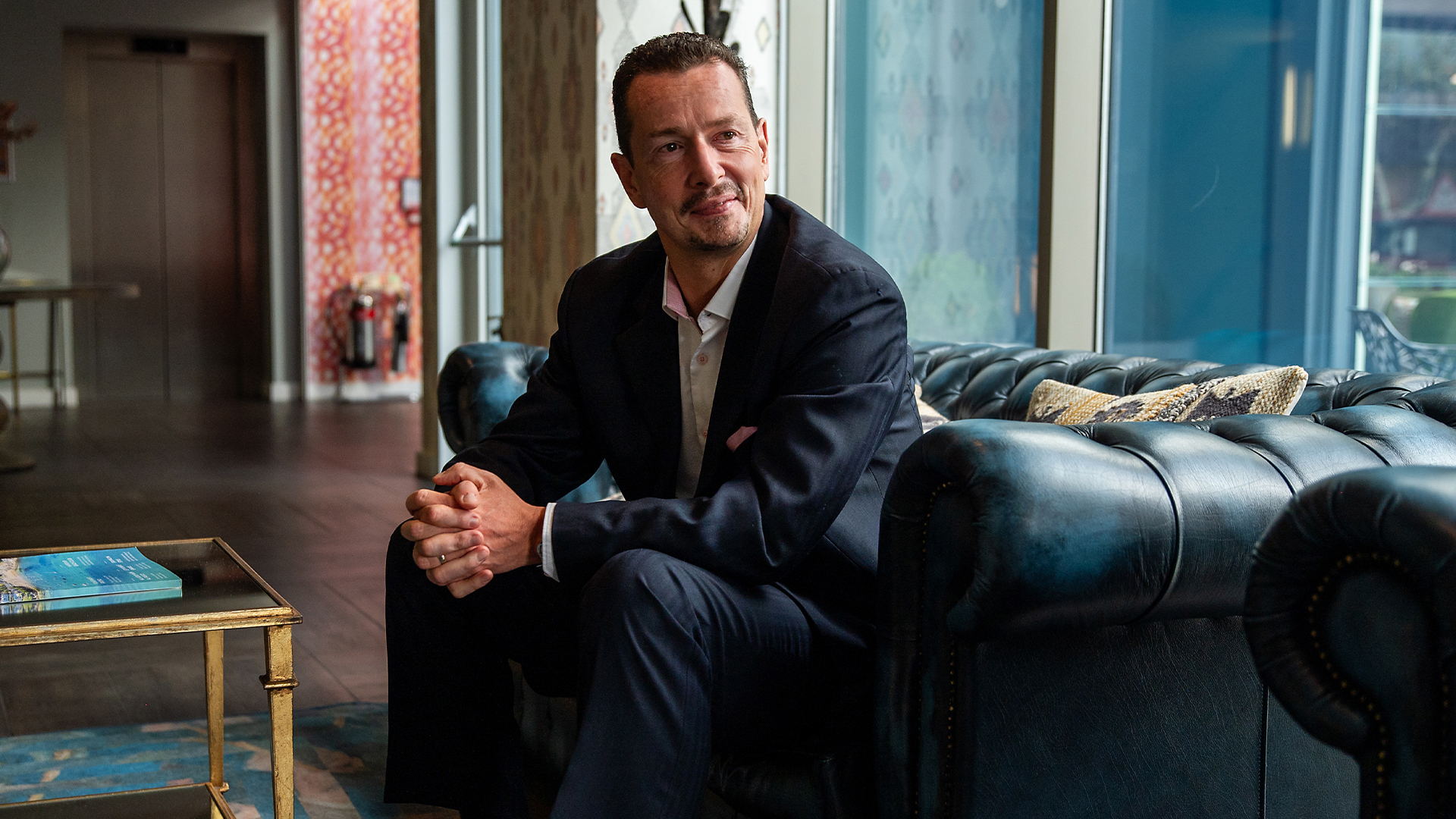
Man in suit sat on sofa

By Serge Santos, the Business Physicist

Coherence in time and in structure is what turns ordinary effort into a force that does real work.

Ordinary light fills a room. A laser burns a hole through steel, lights up a target a hundred miles away, and measures the distance to the moon.

The energy difference between the two is small. The structural difference is everything. In ordinary light, each photon has its own wavelength, phase, and direction, and the effect scatters. In a laser, every photon shares the same wavelength, phase, and direction. They reinforce each other. That single property, coherence, is what concentrates light into a force that does real work, all of it delivered at the point where the beam meets its target.

I see the same physics in business. Most companies emit light. Effort scatters across quarters, across initiatives, across separate ventures, and the cumulative impact dissipates into the room. A few companies build lasers. Their decisions over time, and their structures across the group, line up in phase. The same energy input becomes incomparably more powerful at the point of contact.

There are two kinds of coherence that build legacy businesses. Coherence over time, which means thinking in decades not quarters. And coherence across structure, which means building ecosystems rather than betting everything on a single initiative. Both are required. Either one alone is wasted light.

Coherence over time

Most businesses run on quarterly cycles, driven by board pressure and investor expectations. Public markets create artificial urgency around 90-day windows, and leaders get judged on metrics that are easier to attribute and defend. The result is a bias toward decisions that look good this quarter but contribute nothing to the next decade.

Every 90 days there is a new priority, a revised strategic twist, a reaction to a competitor. Each shift is reasonable in isolation. The cumulative effect is a company whose energy points in slightly different directions every quarter, scattering across the room. Investment in people, systems, and culture gets deferred because the returns are not instant. Brand strength, network effects, and proprietary technology stop accumulating because they require patient, consistent investment. No wonder the median tenure of large-cap CEOs has fallen from over a decade in the early 2000s to roughly seven years today.

The data on the alternative is striking. McKinsey’s longitudinal study of long-term-managed companies found 47% faster revenue growth and 36% higher earnings growth than their short-term peers between 2001 and 2014, and subsequent FCLTGlobal research has confirmed the pattern. Coherence compounds. So does its absence.

Coherence across structure

Coherence over time is half the picture. The other half is structural.

A single business, however well-run, is one small group of photons. It has a wavelength and a direction. By itself, it is still ordinary light. The reason a laser cuts is not that one photon is special. It is that millions of photons reinforce each other. Take any of them out of phase and the beam degrades. Take enough out and it becomes ordinary light again.

The same physics applies to how founders and operators build over decades. Most pour everything into a single company and call it focus. In reality it is structural fragility, a single point of failure with no resilience and no compounding across context. When the market shifts, when a key customer leaves, when a regulation changes, the whole edifice flexes.

A well-designed ecosystem behaves like a laser. Several companies, at different stages and in adjacent domains, share talent, capital, infrastructure, and operating philosophy. Each retains its own identity, but they reinforce each other in phase. When one is under pressure, others carry the load. When one discovers a breakthrough, the others adopt it. When capital is needed in one place, it can flow from another without external dilution. The point of contact, where the businesses meet the market, gets sharper, not softer, as the group grows.

This is why coherent ecosystems compound and isolated companies plateau. The energy input is the same. The phase relationship between the components is what does the work.

When both align

I have built my own work this way. Two of my companies illustrate the point, and the relationship between them illustrates a deeper one.

Funding Alternative Group, an SME lender, is now five years old. We could have raised external capital in year two and scaled aggressively. Instead, we chose patience.

We built the operating model, the team, the track record, and the discipline first. Not everyone agreed. My co-founder wanted to get on the fundraising train before we were ready. I held the line.

Every lender makes bad calls. We had ours, including one large loss in 2023 that could have tanked the business. We absorbed it. If that loss had landed with external investors on the cap table, I am not sure the company would still exist today. Patience kept the decisions in our hands.

Today we are raising substantial third-party funding to triple the size of the business, and the foundations mean investors take less risk than they would have five years ago. The patience compounded.

Compressed Air Group, my industrial engineering business, has grown 10% a year every year since I acquired it in 2017. We did not chase revenue for its own sake. We protected margins, held our values, and grew at a pace the operation could sustain. Eight years of consistent decisions, each one reinforcing the last.

The deeper point is what these two businesses do together. They are not isolated bets. They share governance, capital allocation, and a common operating philosophy. Cash flow from one supports patience in the other. Lessons from running an industrial business inform how we underwrite SME loans. Talent and capital move between them. They reinforce each other in phase. That is the structural half of the laser.

The work of a legacy operator

The best leaders operate at two timescales at once. They execute this quarter while building for the next decade. They run their company while strengthening the ecosystem around it. The toggle is not a contradiction. It is the same physics applied at different frequencies.

Quarterly thinking is fine for execution. It is dangerous as strategy. Single-company focus is fine for early stage. It is dangerous as a permanent posture. The work of a serious operator is to keep the photons in phase, in time and in structure, until the cumulative effect cuts steel.

So the question every leader should ask is whether their decisions are forming a laser or scattering like ordinary light. In time. And across the businesses they build.

That is just physics.

Categories: Advice, Articles

Our awards

Discover Our Awards.

See Awards

You Might Also Like