Back to top

Why Audio Accessibility is the New HR Benchmark

Creating an inclusive workplace in the UK was once a matter of installing ramps and ergonomic chairs. But as we…

Why Audio Accessibility is the New HR Benchmark

27th February 2026

Creating an inclusive workplace in the UK was once a matter of installing ramps and ergonomic chairs. But as we continue into 2026, the meaning of access has shifted from the office floor to the digital atmosphere.

Have you ever stopped to think about the role of sound in your everyday HR function? From training videos and company-wide meetings to quick voice messages on Slack, sound is the pulse of the modern corporate world. However, for millions of workers, this pulse is either muted or nonexistent.

Audio accessibility is no longer a nice-to-have hidden away in a diversity manual but has become the new barometer of success for top-performing UK companies. It’s the difference between a team that feels heard and one that feels excluded from the conversation.

The Silent Gap in Modern British Offices

We are living in a world of audio-first communication, but the statistics paint a picture of profound exclusion. In the UK alone, there are over 18 million people living with some form of hearing loss. When HR teams share uncaptioned training modules or hold meetings that are not transcribed, they are not just failing a compliance test; they are literally locking the door on a huge proportion of the country’s talent pool.

However, audio accessibility is not just for people with hearing loss. Think about the 1 in 7 people in the UK who are neurodiverse. For someone with ADHD or auditory processing challenges, a wall of sound in an open-plan office or an unscripted video meeting can be overwhelming.

By prioritizing audio, HR leaders are solving a universal productivity puzzle that impacts everyone from the person commuting on a noisy train to the senior executive working in their second language.

Why Loud Inclusion is the New Standard

The script has flipped regarding how we support changes in the workplace. The forward-thinking companies in the UK are moving away from a reactive approach, where the employee has to ask for assistance, and towards an accessible by design approach.

There are three key drivers of this change:

  1. The Talent War: Top-tier talent in 2026 seeks out employers who value psychological safety. If a candidate sees that your recruitment videos are fully accessible, it sends a powerful message about your culture before they even sign the contract.
  2. Legal Evolution: Beyond the Equality Act 2010, the implementation of the European Accessibility Act (EAA) is influencing UK standards for digital products, making accessibility a non-negotiable legal benchmark.
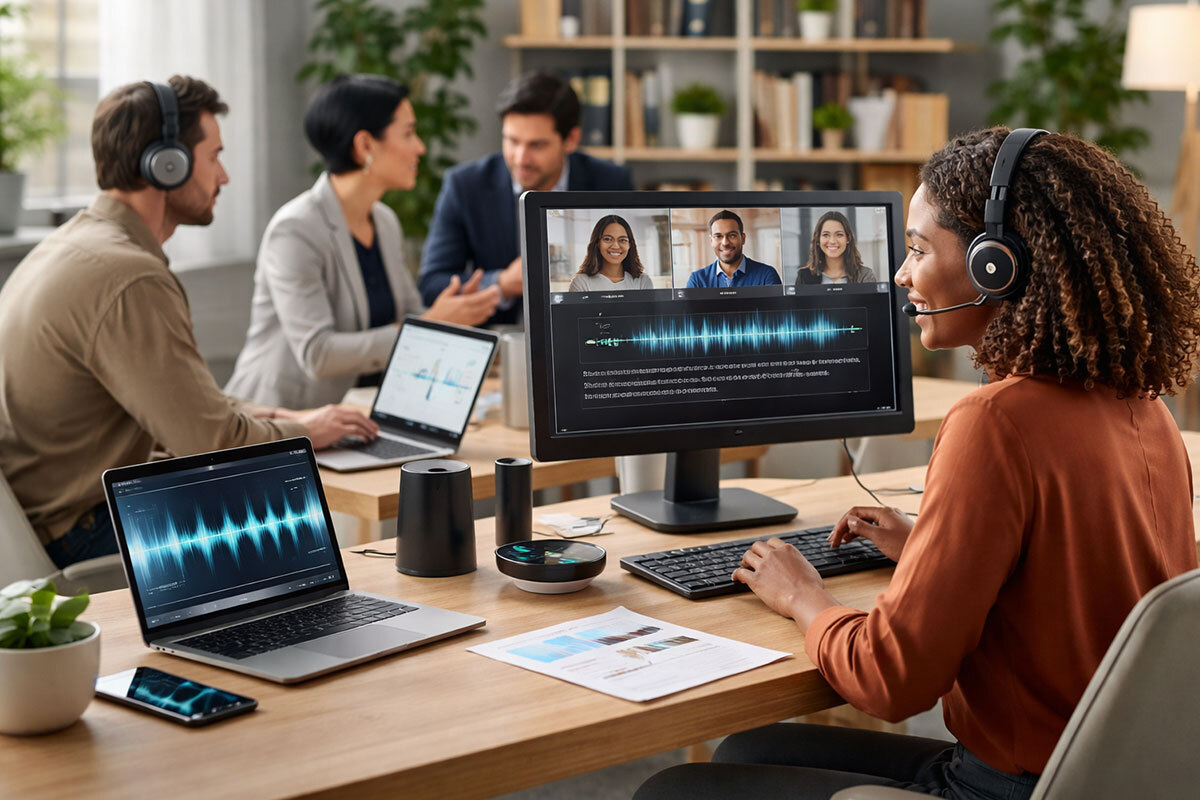
  3. Globalized British Teams: London and Manchester remain hubs for international talent. This is where the strategic use of an audio translator becomes essential. Imagine a live town hall where a technical briefing is instantly translated into the listener’s native tongue or converted into a clear text summary. This isn’t just tech for tech’s sake; it’s the bridge that ensures mission-critical information isn’t lost in the noise of a globalized workforce.

The Productivity Dividend of Sound

Let’s talk numbers, because inclusion has to make financial sense. Studies have shown that inclusive companies have 30% higher profit margins than their peers.

Removing the resistance of inaccessible audio means that listening fatigue is reduced. This is a real phenomenon where employees are working so hard to understand the audio that they’re listening to that it impacts their performance.

By providing transcripts, high-quality audio feeds, and translation, the HR department is essentially upgrading the brainpower of the company.

Moving Beyond Simple Captions

If you believe audio accessibility is simply turning on auto-captioning in a Zoom meeting, it’s high time to dig a little deeper.

Audio accessibility in 2026 means going multi-sensory:

  • Audio Descriptions: Adding narrations of visual content in a video for visually impaired employees.
  • Acoustic Standards: Minimizing background noise in physical offices to accommodate employees with hearing aids or neurodiverse processing requirements.
  • Choice of Medium: Allowing employees to access a memo in the form of a podcast, text document, or translated audio file.

Is Your Organization Meeting the Benchmark?

How does your team stack up? Ask yourself these four questions:

  • Are our All-Hands meetings transcribed in real-time as a standard practice?
  • Do our recruitment videos include high-quality captions and audio descriptions?
  • Have we audited our internal learning management system (LMS) for screen-reader and audio compatibility?
  • Do we provide tools for non-native speakers to engage with audio content in their preferred language?

The Human Element of the Digital Shift

There is a moral issue at play that no company in the UK can afford to ignore. In a world where AI-created content is all around us, the human touch of the HR department is to make sure that no human being is left behind by the technology that we choose to use.

When an organization chooses to invest in audio accessibility, what they are really saying is, “Your contribution is more important than the medium through which you receive it.”

This levels the playing field and gives the person who has the best idea, whether they are deaf, neurodivergent, or simply working in their second language, the same chance to share it as anyone else.

So, Is Audio Accessibility the New HR Benchmark?

The evidence shows it is more than a benchmark; it is a requirement for the modern British workplace. We have moved from a one-size-fits-all communication approach to a personalized and adaptive experience.

Audio accessibility is indicative of the complexity of the 2026 workforce. It recognizes that we are all different, with different needs, different environments, and different ways of interpreting the world around us.

By recognizing that every voice is heard and every ear is accounted for, UK businesses are unlocking the full potential of their workforce. Are you doing the same or falling behind?

Categories: Tech

Our awards

Discover Our Awards.

See Awards

You Might Also Like