Back to top

Why Leadership Is Learned in the Hard Moments

In this exclusive interview with the Inspirational Leadership Speakers Agency, Matt Garman reflects on why leadership is learned through challenge…

Why Leadership Is Learned in the Hard Moments

22nd April 2026

Matt Garman

This exclusive interview with Matt Garman was conducted by Tabish Ali of the Motivational Speakers Agency.

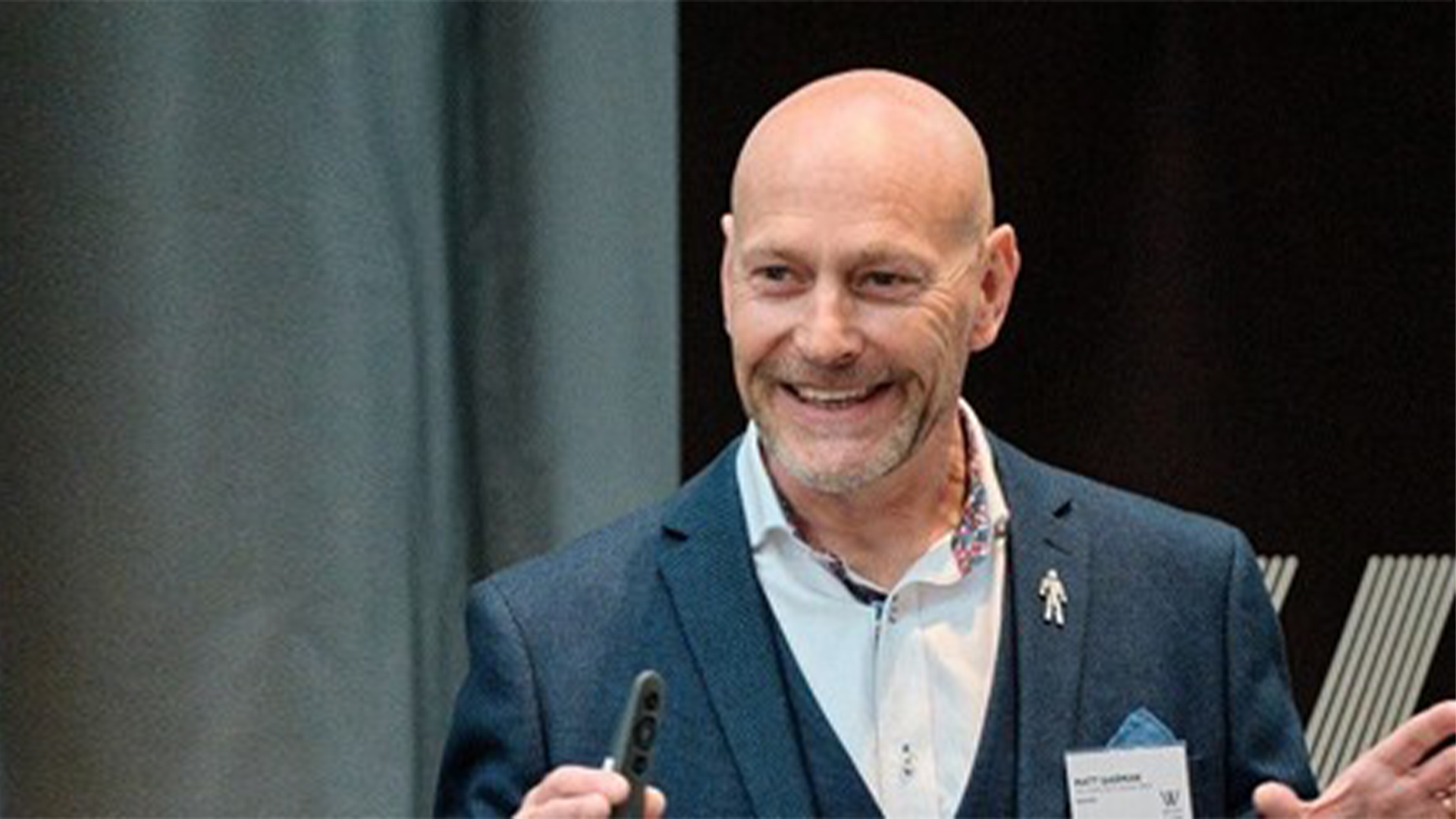
Matt Garman’s route into leadership did not begin in a classroom. He left home at 16 to work as the lowest crew member on a fishing trawler, later moved through senior commercial roles, and went on to found and lead GrowthEnabla. That mix of hard graft, business leadership and lived experience is what gives him credibility as a leadership expert.

What sets Garman apart is that his perspective has been tested well beyond the boardroom. In 2017, he swam the English Channel as part of a relay team in just under 14 hours. In 2023, he rowed across the Atlantic in a team of three, spending 49 days at sea. Those experiences now sit at the centre of his speaking, alongside practical lessons on resilience, teamwork and growth under pressure.

In this exclusive interview with the Inspirational Leadership Speakers Agency, Matt Garman reflects on why leadership is learned through challenge rather than titles, what high-pressure environments reveal about people, and how clearer thinking can help teams perform when it matters most.

Question 1. Leadership is often framed through qualifications and formal training, yet many of the hardest lessons come from lived experience. Why do you believe experience is just as important as academic achievement in shaping effective leaders?

Matt Garman: “Well, fundamentally, I believe that most our most valuable leadership lessons and wisdom come from what I call the unconventional things. So, the things that life throws at us.

“Sometimes they’re positive, sometimes they’re not so positive. Sometimes they’re enjoyable, sometimes they’re downright uncomfortable. And I think the ones that stand out most are the ones that we generally tend to lean in on when we’re looking for a little bit of leadership inspiration.

“And as a result of that, they’re the ones that stay in our minds possibly a little bit longer than some of the training or classroom-based activities that we might be presented with.”

Question 2. Many organisations still confuse leadership with position, authority or a well-written job description. What are the most common misconceptions about leadership that you still see today?

Matt Garman: “I don’t believe leadership can be taught.

“What I believe is that leadership has to be learned, and it can be learned in a number of ways. And one of the things, in so far as misconceptions, I think that far too many people and organizations are looking for job roles and descriptions and they’re not looking deep enough for people and potential.”

Question 3. In high-pressure environments, communication often breaks down when clarity matters most. From your experience, how do you help teams communicate better when the stakes are high?

Matt Garman: “Well, I’m going to give an example here of when I put together a team to row across the Atlantic Ocean. And we were originally going to be a team of four, but one dropped out through some family and work challenges. And we ended up being a team of three.

“And, as you can imagine, rowing 3,000 mi across an ocean, there’s times when it gets a little bit hairy and a little bit scary. And typically they’re when there’s big waves bearing down on us. And I think one of the things that helps people keep on track is clarity of the outcome. What is it we’re looking to try and achieve and how is it we’re going to get there? Because various things are going to get thrown our way.

“And there were some times on the row that we had some quite fraught moments, but there were only when there was a sort of 20 or 30-foot swell bearing down on us. So one of the things I encourage audiences to think about, improved communication, is to really be clear on what the outcome looks like.

“And for us there were three things. I wanted to get three guys safely across an ocean. I wanted to do it in less than 50 days. And the other super important thing was that we wanted to step off the boat as friends, having experienced basically the adventure of a lifetime.”

Question 4. When people leave one of your talks, what do you most want them to take away about leadership, potential and their role in helping others grow?

Matt Garman: “I hope audiences take away from Matt that he’s a down-to-earth kind of guy. Relatable.

“I’ve got a number of stories from leaving home at 16 and working on a trawler to growing and selling a couple of my own tech companies to a number of adventures. And what I’d like the audiences to take away is that leadership isn’t a title. It’s not a role and it’s a responsibility, but it’s not about job descriptions and titles. It’s about people. It’s about potential and it’s about enabling and helping other people to get the most out of themselves.

“So I think one of the key roles of a leader is to create more leaders and I encourage audiences to start thinking a little bit more about those people in their organizations who have got that potential or that little bit of light or that little bit of spark where we can help as leaders or in organizations and adventures to help those people step up to achieve what they want to achieve.

“And I think, to me, that’s the sort of thing that I’d like to encourage organizations and audiences to take on board.”

Categories: Articles, Training

Our awards

Discover Our Awards.

See Awards

You Might Also Like