Back to top

Can a Camera Catch What Your Inspectors Miss?

Can a Camera Catch What Your Inspectors Miss? Walk onto almost any modern factory floor and you’ll spot cameras mounted…

Can a Camera Catch What Your Inspectors Miss?

14th September 2026

Can a Camera Catch What Your Inspectors Miss?

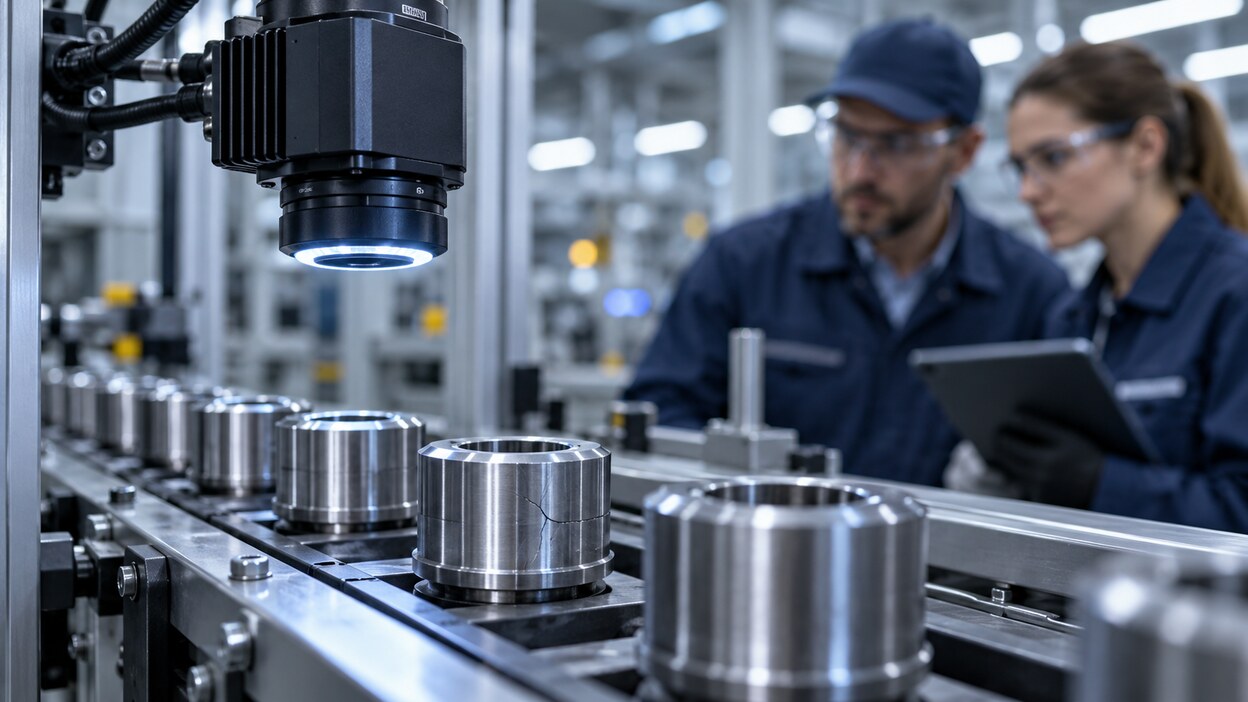
Walk onto almost any modern factory floor and you’ll spot cameras mounted above conveyor lines, watching parts move past at speeds no human eye could keep up with. Computer vision in manufacturing puts those cameras to work alongside software trained to spot defects, measure dimensions, or flag anything that looks out of place on a production line. Instead of a person eyeballing every hundredth unit for cracks or misalignment, a camera system can check every single one, in real time, without getting tired or distracted after an eight-hour shift. That shift from sampling to full inspection is what’s driving so many manufacturers to adopt the technology.

Why Human Inspection Alone Falls Short

Manual quality checks have always had a ceiling. Even the most experienced inspector can only look at so many parts per minute before fatigue sets in, and fatigue is exactly when small defects start slipping through. Lighting conditions, glare, and the sheer repetitiveness of the task all chip away at accuracy over the course of a shift. None of this reflects poorly on the people doing the work; it’s simply what happens when a task requires sustained visual precision at high volume for hours on end.

Vision systems don’t get tired, and they don’t lose focus after the two hundredth identical part. A camera calibrated to detect a hairline crack or a half-millimeter deviation in size applies the same standard to the first unit and the ten-thousandth. That consistency matters most in industries where a missed defect can mean a costly recall or a safety failure, like automotive components or medical device manufacturing.

What These Systems Actually Catch

The range of problems computer vision can identify on a production line is broader than most people expect:

  • Surface defects such as scratches, dents, or discoloration that indicate a process issue.
  • Dimensional inaccuracies where a part falls outside acceptable tolerance ranges.
  • Missing or misaligned components on an assembly, like a bolt that didn’t seat properly.
  • Label and barcode errors that could cause downstream tracking problems.

Each of these issues might seem minor in isolation, but caught early, they prevent defective products from moving further down the line and multiplying the cost of the fix.

Where Tracking and Vision Start to Overlap

Defect detection is only half the picture on a smart factory floor. Once a camera flags a problem, that information needs to connect to a specific unit, batch, or component so the issue can be traced back to its source. This is where identification technology becomes just as important as the vision system itself, since a defect report is far less useful if nobody can tie it to the exact part or production run it came from.

Manufacturers building out these connected systems often work with a partner on RFID solution design early in the process, rather than treating tracking as an afterthought bolted onto an existing line. Getting the tagging strategy right from the start means defect data, location data, and production history all point back to the same record instead of living in separate systems that require manual reconciliation. That alignment is what turns a vision system from a standalone tool into part of a genuinely traceable production process.

Getting Started Without Overhauling Everything

Manufacturers don’t need to replace an entire production line to bring computer vision on board. Most successful rollouts start with a single high-value or high-defect-rate process, prove out the accuracy improvements there, and expand from that foundation. Running the new system alongside existing manual checks for a trial period also helps build trust with quality teams before removing human inspection entirely.

The upfront investment in cameras, lighting, and software can feel significant, but the payoff usually shows up quickly in reduced scrap rates and fewer downstream returns. Once a factory sees how much a single camera-equipped station can catch that used to slip through, expanding coverage to additional lines tends to become less a question of if and more a matter of scheduling.

Categories: Tech

Our awards

Discover Our Awards.

See Awards

You Might Also Like