Back to top

A Practical Guide to Car Shipping Costs in 2027

Shipping a car can feel like a black box. One company quotes a number that seems too good to be…

A Practical Guide to Car Shipping Costs in 2027

17th November 2026

Shipping a car can feel like a black box. One company quotes a number that seems too good to be true, another quotes twice as much, and nobody explains why. The good news is that car shipping prices follow a fairly predictable pattern once you know what drives them.

This guide breaks down what you can expect to pay, what changes the price and how to read a quote before you book. Every figure below comes from a named source, so you can check it yourself.

Quick answer: Most quotes for shipping a standard sedan on an open carrier within the continental U.S. fall between about USD 650 and 1,800, depending on distance. In Kelley Blue Book’s 2026 quote test, eight transport companies quoted an average of USD 751 for a 500-mile move, USD 1,020 for 1,000 miles and USD 1,406 for 2,500 miles. Enclosed transport typically adds 30% to 60%.

The Cost of Shipping a Car

Distance sets the baseline for almost every quote. Longer trips cost more in total, but the price per mile drops as the distance grows, because loading, paperwork and dispatch costs are spread over more miles.

Here’s how that looked in Kelley Blue Book’s quote test, which priced a 2025 Honda Accord shipped from Orlando to Atlanta, New York City and Los Angeles:

Distance Quote range Average quote Average per mile
500 miles USD 650 to 890 USD 751 USD 1.50
1,000 miles USD 800 to 1,350 USD 1,020 USD 1.02
2,500 miles USD 1,050 to 1,800 USD 1,406 USD 0.56

FreightWaves Checkpoint’s 2026 estimates, which assume an operable sedan on door-to-door open transport, show the same pattern:

Distance Typical total cost Typical cost per mile
Under 500 miles USD 540 to 1,100 USD 1.25 to 2.00
500 to 1,500 miles USD 700 to 1,800 USD 0.65 to 1.20
1,500+ miles USD 1,050 to 3,000+ USD 0.55 to 0.95

How Much Does It Cost to Ship a Car Cross Country?

A coast-to-coast move usually lands in the top tier. Kelley Blue Book’s 2,500-mile quotes from Orlando to Los Angeles averaged USD 1,406, with quotes running from USD 1,050 to 1,800. FreightWaves puts routes over 1,500 miles at USD 1,050 to more than 3,000 for a standard sedan on open transport.

Expect the trip itself to take a while. FreightWaves estimates seven to 21 days for cross-country deliveries, compared with five to 10 days for 500 to 1,500 miles.

How Does Vehicle Size Affect Car Shipping Costs?

Bigger vehicles take up more trailer space and add weight, so they cost more to move. FreightWaves’ 2026 estimates by vehicle type:

Vehicle type Under 500 miles 500 to 1,500 miles 1,500+ miles
Standard sedan USD 540 to 900 USD 700 to 1,500 USD 1,050 to 3,000+
SUV USD 600 to 1,100 USD 800 to 1,700 USD 1,200 to 3,200+
Truck USD 650 to 1,150 USD 900 to 1,850 USD 1,300 to 3,400+

If your vehicle is lifted, lowered, extended or carries roof racks, mention it when you ask for a quote. Carriers price by the space and equipment a vehicle needs, so an undisclosed modification can change the price at pickup.

What Is Open vs. Enclosed Car Transport?

Open transport is the multi-car hauler you see on the highway. Your car rides exposed to weather and road debris, but it’s the cheapest and most widely available option.

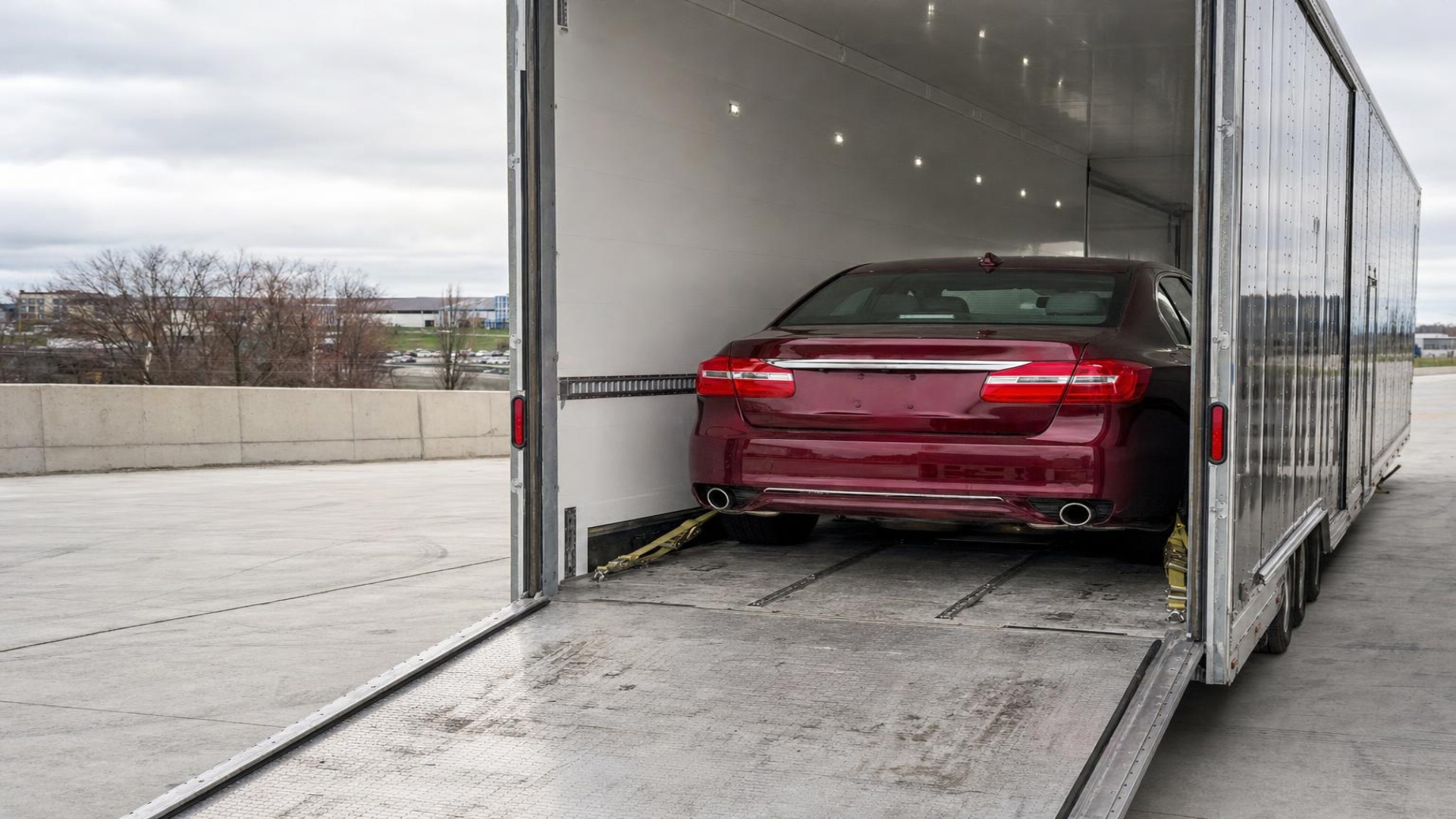
Enclosed transport moves your car inside a covered trailer. It protects against weather and debris, but trailers carry fewer vehicles, so you pay more and may wait longer for a carrier.

Distance Open transport Enclosed transport
500 miles USD 600 to 700 USD 850 to 1,000
1,000 miles USD 650 to 800 USD 1,000 to 1,200
2,000 miles USD 1,200 to 1,400 USD 1,700 to 2,000

FreightWaves puts the enclosed premium at 30% to 60% over open, while Kelley Blue Book says enclosed can add 50% or more.

Which Option Is Right for You?

Open transport is the sensible default for daily drivers, leased cars and most used vehicles. Enclosed is worth the extra cost for classics, exotics, newly painted or restored cars, and low-clearance vehicles that need a liftgate. A simple test: if a rock chip or a layer of road grime would cost you real money or real heartache, pay for enclosed.

What Factors Affect Car Shipping Costs?

Distance

Distance is the starting point of every quote. As both tables above show, the total rises with miles while the per-mile rate falls.

Route Popularity

Carriers fill their trucks fastest on busy interstate corridors between major metros. A pickup in a big city on a popular lane is usually cheaper than one in a rural area well off the interstate, where the driver has to detour. FreightWaves notes that rural and hard-to-reach locations add cost.

Time of Year

Demand changes with the seasons. Kelley Blue Book reports that brokers see April through September as the busier half of the year, with prices that can be higher during the summer peak. ConsumerAffairs adds that rates are often lowest in late winter and early spring, while spring and summer are the most expensive seasons and late fall can spike.

Transport Type

Choosing enclosed instead of open is usually the largest single upgrade cost, at 30% to 60% more according to FreightWaves.

Vehicle Condition

A car that doesn’t run needs a winch or forklift to load. FreightWaves estimates that an inoperable vehicle adds about USD 150 to 300. Tell the company up front whether the car starts, rolls, steers and brakes.

Timeframe and Lead Time

Expedited shipping is the most expensive option. FreightWaves says it can shorten the pickup window to 24 to 48 hours. If your dates are flexible, you give the dispatcher room to match your car with a truck already running your route, which usually lowers the price.

Car Shipping Add-On Costs at a Glance

Many quotes look similar until the extras show up. Here’s what can push a price up:

Add-on Typical effect on price When it applies
Enclosed trailer 30% to 60% more than open (FreightWaves) Classic, luxury, exotic or low-clearance vehicles
Inoperable vehicle About USD 150 to 300 (FreightWaves) Car won’t start or can’t be driven onto the trailer
Larger vehicle SUVs and trucks priced above sedans (see table above) SUVs, pickups, vans and modified vehicles
Expedited pickup Highest-priced option (FreightWaves) Pickup needed within a day or two
Rural pickup or delivery Added cost (FreightWaves) Addresses far from major routes
Peak season Higher rates (Kelley Blue Book, ConsumerAffairs) Summer and late fall

Ask every company to list these as separate line items. A low base price with several surcharges can end up costing more than a higher, all-in quote.

How to Estimate Your Car Shipping Cost

Brokers vs. Carriers

A carrier owns the trucks and moves your car. A broker arranges the shipment and assigns it to a carrier from its network. Many online quotes come from brokers, which is fine as long as you know who will actually haul your car and who handles problems along the way. A broker is only as reliable as the carriers it books, so ask how the company chooses its carriers.

What Goes Into a Quote

A useful quote is built on specific inputs: pickup and delivery ZIP codes, your vehicle’s year, make and model, whether it runs, open or enclosed transport, and your first available date. Before you compare numbers, check:

  • What’s included. Door-to-door service, insurance and fuel should be part of the price, not extras.
  • How long the price holds. FreightWaves notes quotes are typically valid for 24 to 48 hours.
  • When you pay. Many brokers take payment only after a carrier is assigned to your shipment. Others ask for a deposit at booking. Get the trigger in writing.
  • Whether dates are estimates. Most companies give an estimated pickup window and delivery window, not a guaranteed date.

A Real Route Example

Published route tables help you sanity-check a quote. Cross Auto Transport, a Chicago-based car shipping company, lists about USD 999 to 1,299 for open transport on its roughly 1,380-mile Chicago-to-Miami route, in a table updated September 30, 2026. That sits within FreightWaves’ 500 to 1,500 mile range of USD 700 to 1,800. Use examples like this as a benchmark, then get a written quote for your exact ZIP codes and dates.

How to Save Money on Car Shipping

  • Choose open transport unless your vehicle truly needs protection. It’s the biggest single saving available.
  • Book early. FreightWaves recommends booking at least two to four weeks ahead for better rates and more carrier options.
  • Be flexible on dates. A wider pickup window lets the dispatcher fit your car onto a truck already heading your way.
  • Avoid peak months if you can. Late winter and early spring are often cheapest, according to ConsumerAffairs.
  • Meet the truck near a main road. If you live on a narrow street or rural road, offering a nearby parking lot can cut detour costs.
  • Compare like for like. Send every company the same details and compare the total, including surcharges and payment terms.

Should You Ship Your Car or Drive It?

On direct costs alone, driving is usually cheaper. Kelley Blue Book concluded that “driving is almost always less expensive” than shipping.

The numbers bear that out. AAA’s 2026 Your Driving Costs study puts fuel at 17.32 cents per mile and maintenance, repairs and tires at 11.73 cents per mile. That’s about USD 290 in operating costs for a 1,000-mile drive, compared with Kelley Blue Book’s USD 1,020 average shipping quote for the same distance. Add hotels, meals and the time off work, though, and the gap narrows quickly.

Consideration Drive it Ship it
Direct cost for 1,000 miles About USD 290 in fuel and upkeep (AAA), plus lodging and meals About USD 1,020 average quote (Kelley Blue Book)
Your time Several days on the road No driving time
Wear on the car Adds miles, tire wear and depreciation No added miles
Best for Short moves, flexible schedules, one car Long moves, tight schedules, several cars, leased cars near their mileage cap

Shipping usually makes sense when you’re relocating for work and flying anyway, moving more than one car, short on time or close to a lease mileage limit.

How to Check a Car Shipping Company Before You Book

Interstate brokers and carriers must register with the Federal Motor Carrier Safety Administration (FMCSA). Since May 19, 2026, that registration runs through FMCSA’s Motus system, which includes a public search by USDOT number, legal name or DBA. The older Licensing and Insurance system now shows historical records only.

Before you book:

  1. Search the company’s USDOT number in Motus and confirm the name matches.
  2. Ask for the assigned carrier’s name and USDOT number before pickup.
  3. Request the carrier’s certificate of insurance and check the coverage limit and deductible.
  4. Walk around the car with the driver at pickup, note existing damage on the Bill of Lading and take timestamped photos.
  5. Inspect again at delivery before you sign, and write any new damage on the Bill of Lading.

How We Built These Numbers

The price figures in this guide come from published 2026 data, the most recent available going into 2027:

  • Kelley Blue Book: quotes from eight transport companies for a 2025 Honda Accord shipped from Orlando.
  • FreightWaves Checkpoint: 2026 market estimates for an operable sedan on door-to-door open transport, updated May 29, 2026.
  • ConsumerAffairs: car shipping cost ranges and seasonal guidance, updated September 12, 2026.
  • AAA: 2026 Your Driving Costs study, for per-mile driving costs.
  • FMCSA: Motus registration guidance.

Prices change with fuel, demand and season, so treat these as planning ranges and confirm your final price with a written quote.

Car Shipping Cost FAQs

What is the average cost to ship a car?

In Kelley Blue Book’s 2026 quote test, the average quote was USD 1,020 for a 1,000-mile move. ConsumerAffairs puts the typical range at USD 500 to 1,700, or about 53 cents to USD 2.30 per mile.

How much does it cost to ship a car per mile?

It depends on distance. FreightWaves estimates USD 1.25 to 2.00 per mile for trips under 500 miles, USD 0.65 to 1.20 for 500 to 1,500 miles and USD 0.55 to 0.95 for longer routes.

How much more does enclosed transport cost?

Typically 30% to 60% more than open transport, according to FreightWaves. Kelley Blue Book says it can add 50% or more.

How long does it take to ship a car cross country?

FreightWaves estimates seven to 21 days for cross-country deliveries. Shorter trips under 500 miles usually take three to seven days.

Does it cost more to ship a car that doesn’t run?

Yes. Loading a non-running car requires a winch or forklift, which FreightWaves estimates adds about USD 150 to 300.

When is the cheapest time to ship a car?

Late winter and early spring are often the cheapest, according to ConsumerAffairs. Summer and late fall tend to cost more because demand is higher.

Is it cheaper to ship a car or drive it?

Driving is usually cheaper on direct costs. AAA’s 2026 figures put fuel and upkeep at about USD 290 per 1,000 miles, compared with a USD 1,020 average shipping quote for the same distance. Shipping wins when you count travel time, hotels, meals and extra wear.

Is there a cheaper alternative for East Coast moves?

If you’re traveling between Virginia and Florida, Amtrak’s Auto Train carries you and your car together. Kelley Blue Book reported a vehicle fare of USD 285 between Lorton, Virginia, and Sanford, Florida (USD 295 for vehicles over 216 inches), plus your own train ticket.

How much does it cost to ship a car to Hawaii?

Hawaii shipments involve ocean transport and cost far more than mainland moves. Kelley Blue Book reported one shipment of two vehicles to Hawaii that cost about USD 5,000 and took nearly three weeks.

How do I know if a car shipping company is legitimate?

Look up its USDOT number in FMCSA’s Motus public search, confirm the legal name matches, and ask for the assigned carrier’s details and insurance certificate before pickup. Be wary of any company that won’t share these.

Categories: Logistics

Our awards

Discover Our Awards.

See Awards

You Might Also Like